Protocol (1) 16/2026
To our sons and daughters, students of the Christian Schools in the Holy Land,
To the Priests and Religious Men and Women entrusted with our Schools,
To the Principals, Teachers, Administrative Staff and Employees,
To our dear parents,
Dear brothers and sisters,
May the Lord give you peace!
As August draws to a close, the anticipation of a new school year can be felt everywhere. Our schools, classrooms and courtyards are being prepared and staff members are readying themselves to welcome the students. In our homes, schoolbags are being filled, books being covered and uniforms being prepared.
In only a few days, tens of thousands of students will again pass through the gates of our Christian schools. Together with their teachers and all those who serve them, they will begin another school year and write a new chapter in their lives.
Yet we cannot celebrate this beginning without remembering that, in some parts of the Holy Land, returning to school can no longer be taken for granted. There are children whose classrooms no longer stand and communities in which the joy of a new school year is overshadowed by death, displacement and destruction. These children, too, belong to us. May this new beginning also be a sign of hope for them, a promise that destruction will not have the final word and that they too, will one day return safely to learning and ordinary life.
Our Christian schools are far more than educational institutions. They are a cornerstone of the Christian presence in the Holy Land. They also welcome many students and families from different religious traditions and educate generations in coexistence, mutual respect and acceptance of the other. Our openness, however, must never be confused with uncertainty about who we are. The Christian identity of our schools is the foundation of their mission and daily life. It is expressed in their values, symbols, traditions, calendar and educational character. All who freely choose our schools are warmly welcomed and fully respected and are likewise expected to respect their Christian character and the rules through which it is preserved. Genuine coexistence respects every person without weakening the identity of the institution that welcomes them.
We know that preserving this identity, while facing the many other pressures placed upon our schools, requires patience, firmness and courage. School leaders and staff should know that they do not bear this responsibility alone: it is one that we share, and in which we stand with them.
We express our profound gratitude to all who take part in this mission. Your service is not merely a profession; it is an act of hope in the future of this land. We do not take your dedication for granted. Your dignity and rights matter to us and we remain committed to working tirelessly to secure the best possible conditions and opportunities for our teachers, staff and students.
As we begin this year, we encourage a renewed attention to religious education and to the spiritual formation of our students. It is not enough for a Christian student to recite prayers or name the sacraments without understanding their meaning. Religious formation must lead our students towards a living and personal knowledge of their faith, one they understand, reflect upon and carry with them, rather than merely repeat.
To be a Christian of the Holy Land is not simply a matter of geographical identification. It means developing a profound relationship with the land of the Gospel and understanding the mysteries of faith through the places in which they unfolded. Religious education must therefore enable our Christian students to encounter Scripture through the Holy Places of this land. Where visits are possible, they should be carefully prepared and form an integral part of religious formation. Where distance, borders or restrictions make direct access impossible, our schools can find other meaningful ways to bring these places and their Gospel significance to life.
Whether through direct visits, Scripture, guided study, visual resources or encounters with Christian communities in other parts of the Holy Land, students should understand the mysteries associated with these places and recognize their foundations in the life, ministry, death and Resurrection of Christ. No student should remain a stranger to any part of the spiritual heritage of the Holy Land merely because he or she cannot physically reach it. Such religious education requires teachers who are adequately trained, deeply rooted in their faith and passionate about passing it on. The Office of Christian Schools, together with each school individually, should therefore invest in the preparation and continued formation of these educators, equipping them not only to teach religious knowledge, but to guide students towards a living encounter with Scripture and with the spiritual heritage of the Holy Land.
Dear educators, through your daily work you sustain the quiet miracle of the enduring Christian presence in the Holy Land.
Dear parents, you remain our first and most essential partners in this mission. Our schools cannot fulfil their task without your trust, support and active participation.
To our students, we wish a year filled with curiosity, perseverance and meaningful growth.
To all who serve in this mission, we extend our heartfelt appreciation and prayers.
May the Lord grant us a peaceful, fruitful and successful academic year. May He protect all the children of this land, especially those deprived of safety and education, and may our schools remain places of faith, knowledge, encounter and hope.
Jerusalem, 26 August 2026, Feast of St. Mary of Jesus Crucified
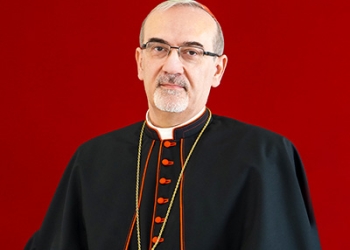
+ Pierbattista Card. Pizzaballa
Latin Patriarch of Jerusalem
President of the ACOHL