« Nous sommes venus nous tenir à vos côtés et travailler avec vous » : le cardinal Woelki en visite de solidarité en Terre Sainte
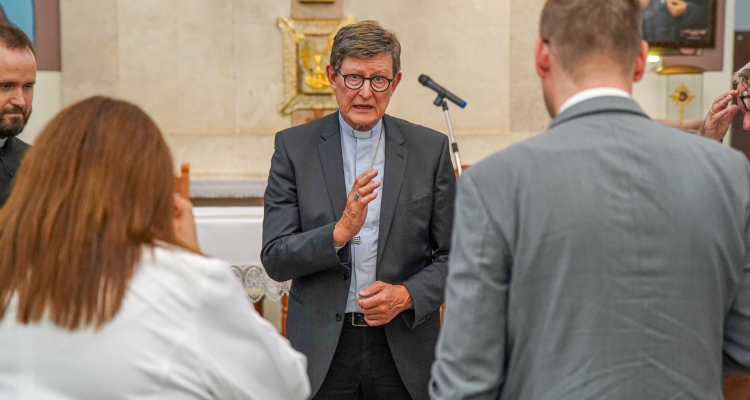
Pendant trois jours, le cardinal Rainer Woelki, archevêque de Cologne, en Allemagne, a effectué une visite de solidarité en Terre Sainte, se rendant dans plusieurs villes, villages et institutions du Patriarcat latin. Au cours de son séjour, il a rencontré des membres de l’Église, en particulier des jeunes, et a écouté leurs témoignages ainsi que les défis auxquels ils sont confrontés dans le contexte actuel. Cette visite a été l’occasion d’exprimer la solidarité de l’Église de Cologne avec l’Église et ses fidèles en Terre Sainte, de renouveler son engagement à les soutenir et à se tenir à leurs côtés, ainsi que de renforcer leur présence et leur mission sur leur terre natale.
Premier jour
Le cardinal Woelki est arrivé dans la ville de Naplouse, accompagné d’une délégation de la Représentation allemande. Il a été accueilli par le père Miguel Jiménez, curé de la paroisse, les vicaires, les membres du conseil paroissial et des représentants de la jeunesse.
Au cours de la rencontre, ils ont discuté de la situation générale à Naplouse, de la réalité des chrétiens dans la ville et des défis auxquels ils sont confrontés, en particulier ceux qui touchent la jeune génération. Les nouvelles générations s’appuient en effet de plus en plus sur Internet et les réseaux sociaux, parfois au détriment des interactions directes et de l’engagement communautaire.
Pour sa part, le père Miguel a souligné que les chrétiens de Naplouse cherchent à renforcer la communication avec les différents secteurs de la société, à affirmer leur présence et leur rôle, et à montrer qu’ils constituent une partie active et intégrante de la société de Naplouse, ainsi qu’une composante indissociable de la ville.
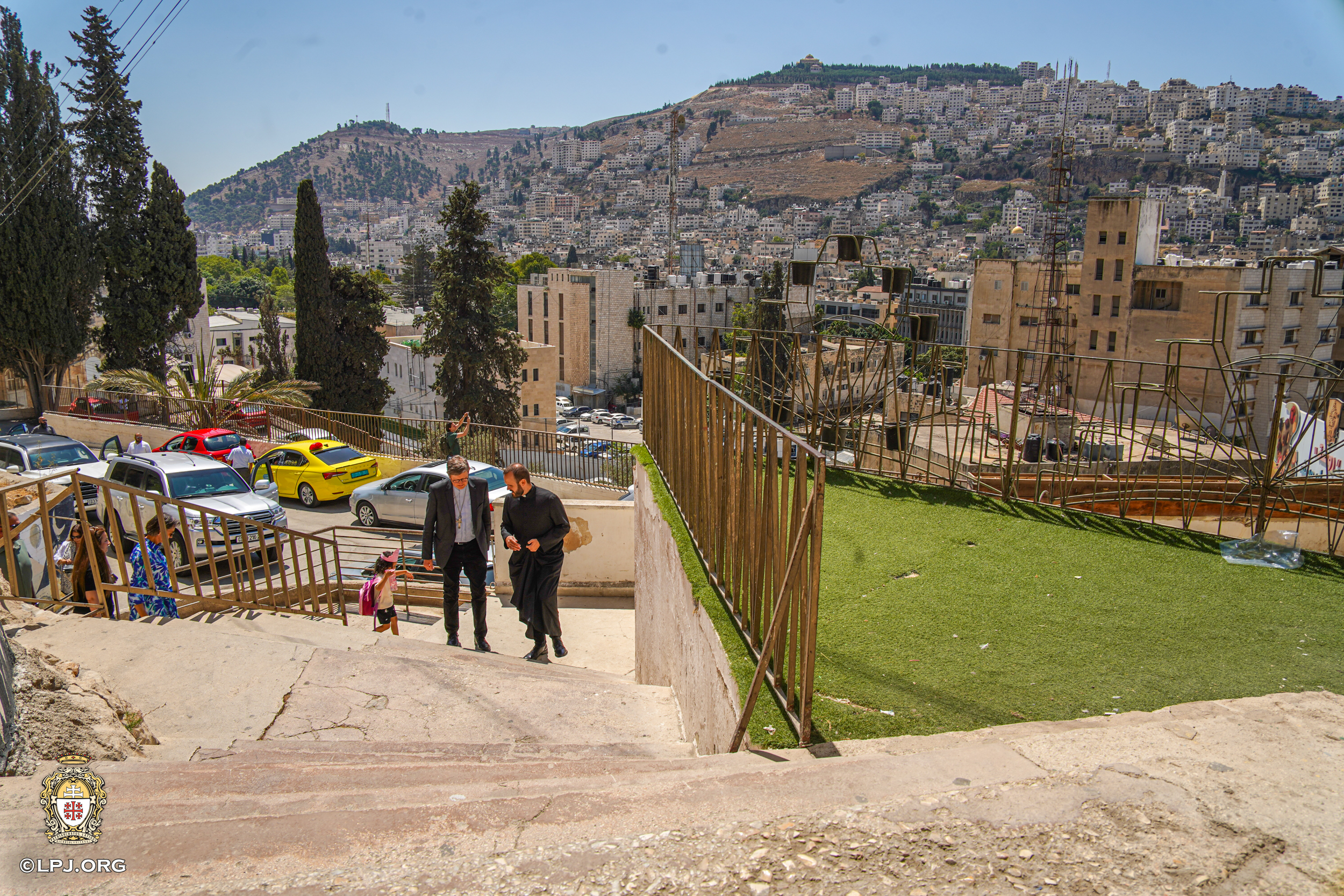
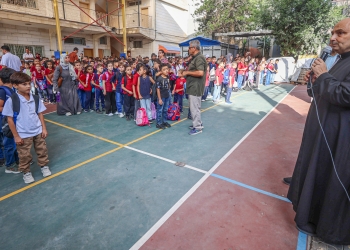
Le cardinal Woelki s’est également rendu à l’église Saint-Justinus, où une brève prière pour la paix a été prononcée, avant de visiter l’école maternelle et l’école du Patriarcat latin de Naplouse. Il y a été accueilli par la directrice de l’établissement, Mme Dina Duani. Le cardinal et la délégation qui l’accompagnait ont tenu une réunion avec la direction de l’école, au cours de laquelle ils ont discuté de la situation générale dans la ville, des défis auxquels Naplouse est confrontée, ainsi que de l’état de l’éducation et des difficultés rencontrées par le secteur éducatif dans le contexte actuel.
Le cardinal Woelki s’est ensuite rendu dans le village d’Aboud, où il a visité l’église Notre-Dame-des-Douleurs. Il y a été accueilli par le curé de la paroisse, le père Raymond Haddad. La visite a porté sur l’école maternelle, l’école et la salle paroissiale, ce qui lui a permis de découvrir les établissements scolaires et les installations paroissiales, ainsi que leur rôle au service des habitants du village.
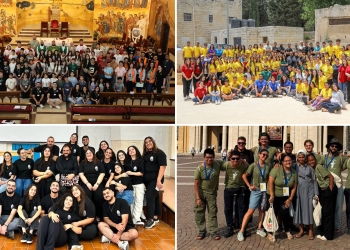
Le cardinal Woelki a également rencontré les jeunes et les scouts d’Aboud, a écouté leurs points de vue et leurs aspirations, et a pu mieux comprendre la réalité à laquelle les jeunes sont confrontés ainsi que les défis auxquels ils font face. Il s’est également renseigné sur la situation des chrétiens du village et sur les moyens de préserver et de renforcer leur rôle dans la société.
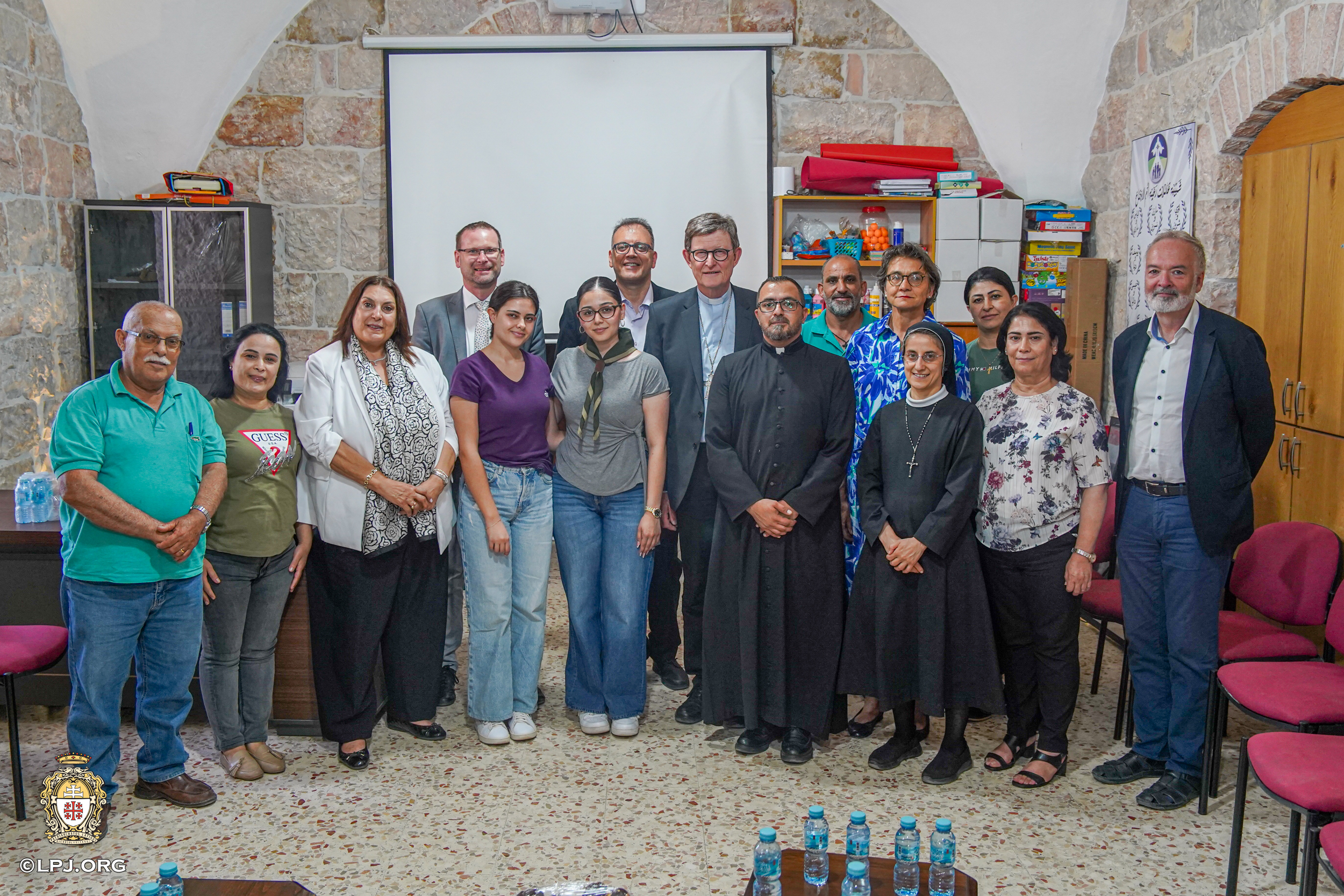
À la fin de cette première journée, le cardinal Woelki s’est rendu dans le village d’Ain Arik, où il a été accueilli par le curé, le père Firas Abdel Rabbo, en compagnie de plusieurs prêtres et de sœurs carmélites. La rencontre a porté sur les défis auxquels le village est confronté dans le contexte actuel, ainsi que sur la situation de l’éducation, son développement et les difficultés auxquelles elle fait face.
La visite s’est achevée par une rencontre au Centre de jeunesse, où la délégation a été accueillie par le père George Haddad, directeur spirituel adjoint, Mme Faten Asaid, secrétaire générale, et plusieurs jeunes. Cette rencontre a été l’occasion d’écouter les jeunes, de mieux comprendre leur réalité et leurs aspirations, et de discuter de leur rôle dans la préservation de la présence de l’Église et de la communauté chrétienne à Ain Arik.
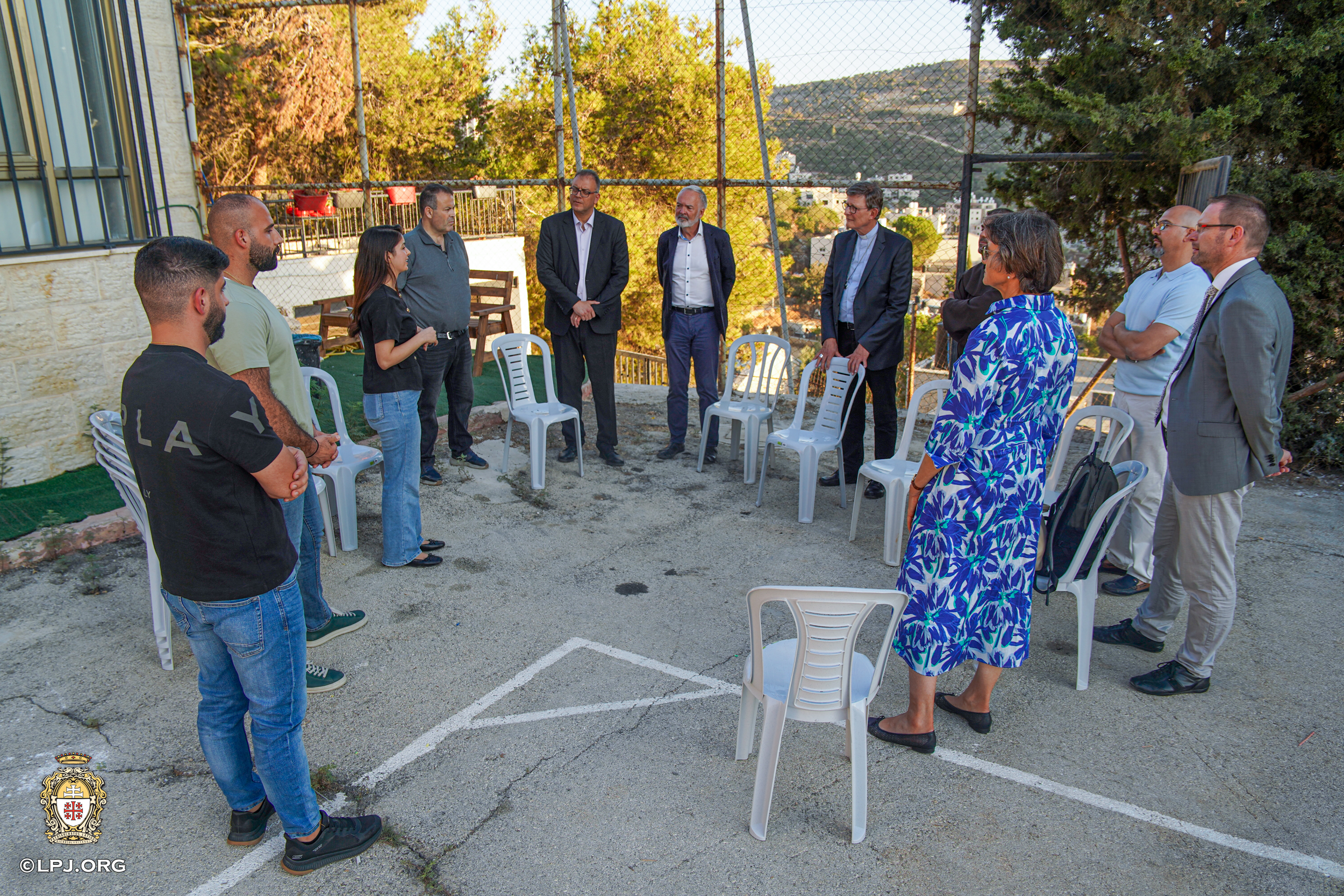
Cette visite s’inscrivait dans le cadre de la mission de solidarité du cardinal Woelki, visant à se tenir aux côtés de l’Église et de ses fidèles, à écouter les défis auxquels ils sont confrontés et à réaffirmer l’importance de leur présence et de leur mission dans les différentes villes et villages de Palestine.
Deuxième jour
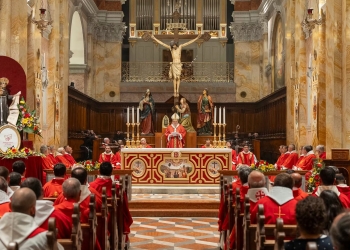
La deuxième journée a débuté par la célébration d’une messe à l’intérieur du Tombeau vide de la basilique du Saint-Sépulcre, offerte pour la paix et pour les chrétiens de Terre Sainte.
À l’issue de la messe, le cardinal Woelki a rencontré l’archevêque Hosam Naoum, archevêque anglican de Jérusalem. Ils ont évoqué la situation actuelle en Terre Sainte, les défis auxquels sont confrontées les Églises et les chrétiens, ainsi que l’importance de renforcer la coopération dans ces circonstances difficiles.
La visite a également compris une visite guidée de plusieurs projets du Patriarcat latin à Jérusalem, offrant l’occasion d’en savoir plus sur les différentes initiatives et les services proposés par le Patriarcat, ainsi que sur son rôle au service de la communauté et dans le renforcement de la présence de l’Église et de ses institutions.
Dans le cadre de cette visite, le cardinal Woelki a rencontré le nouveau vicaire général du Patriarcat latin, M. Johnny Zidan. Leurs échanges ont porté sur le travail et les projets du Patriarcat, les défis auxquels il est confronté, ainsi que sur les moyens de continuer à servir l’Église et ses fidèles.
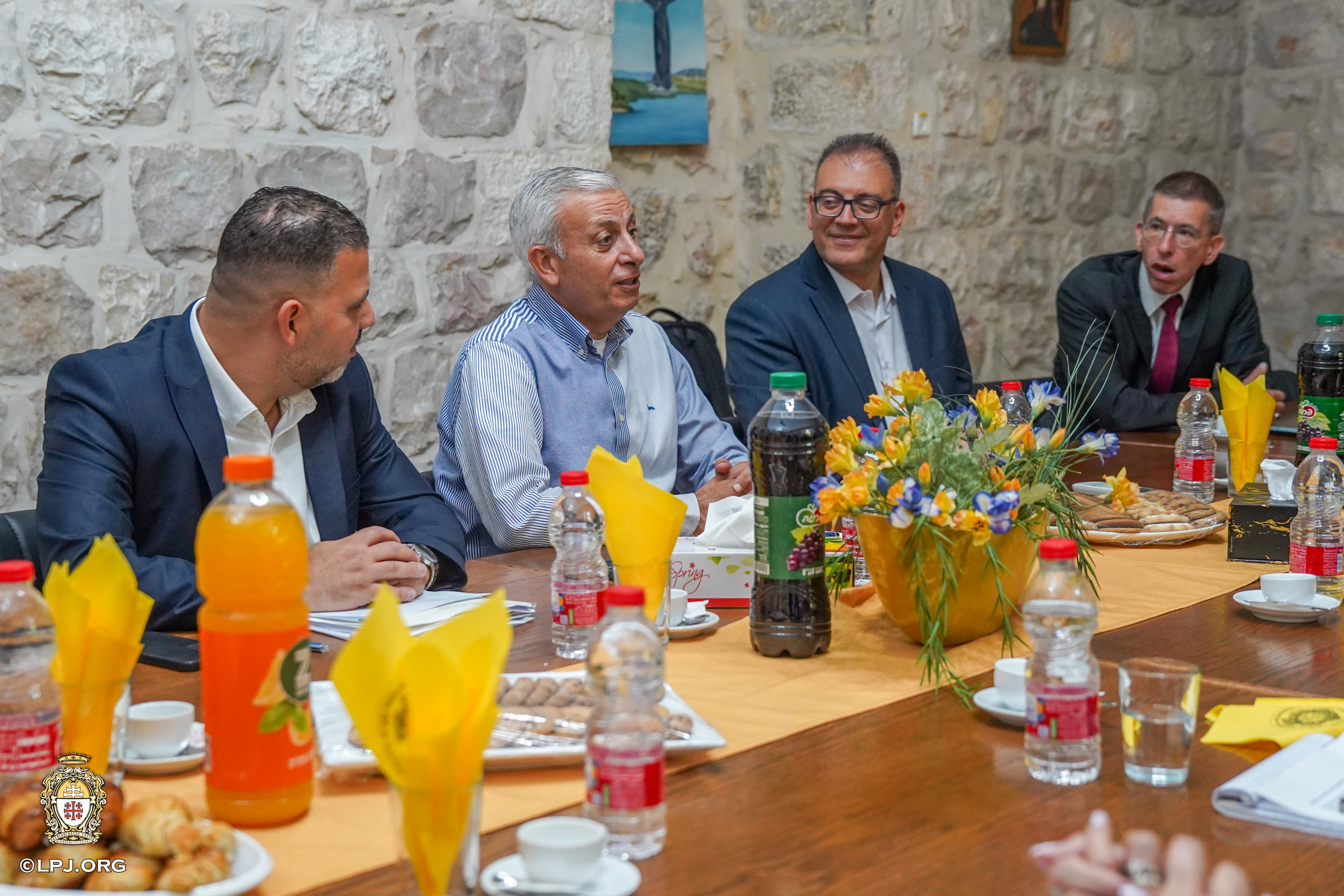
Le cardinal Woelki a également visité la vieille ville de Jérusalem et s’est rendu dans plusieurs demeures historiques, ce qui lui a permis de mieux comprendre la situation des familles qui y vivent, ainsi que la réalité des chrétiens dans la Ville Sainte et les défis auxquels ils sont confrontés.
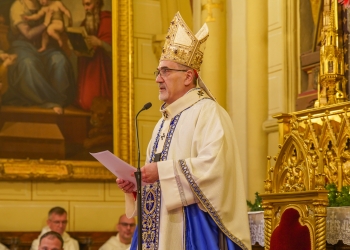
En fin de journée, Sa Béatitude le cardinal Pierbattista Pizzaballa, patriarche latin de Jérusalem, a remis la Médaille d’or de la Sainte-Croix au cardinal Woelki et à M. Nadim Aman, en reconnaissance de leur soutien constant aux chrétiens de Terre Sainte et de leur solidarité avec l’Église et ses fidèles.
Dans son allocution, le cardinal Pizzaballa a remercié le cardinal Woelki pour sa visite de solidarité, déclarant : « Nous vous remercions pour cette visite de solidarité, et nous vous remercions pour le soutien considérable que Cologne apporte aux chrétiens de Terre Sainte. Nous vivons dans des circonstances difficiles, et c’est pourquoi votre présence et votre solidarité à nos côtés revêtent une grande importance. »
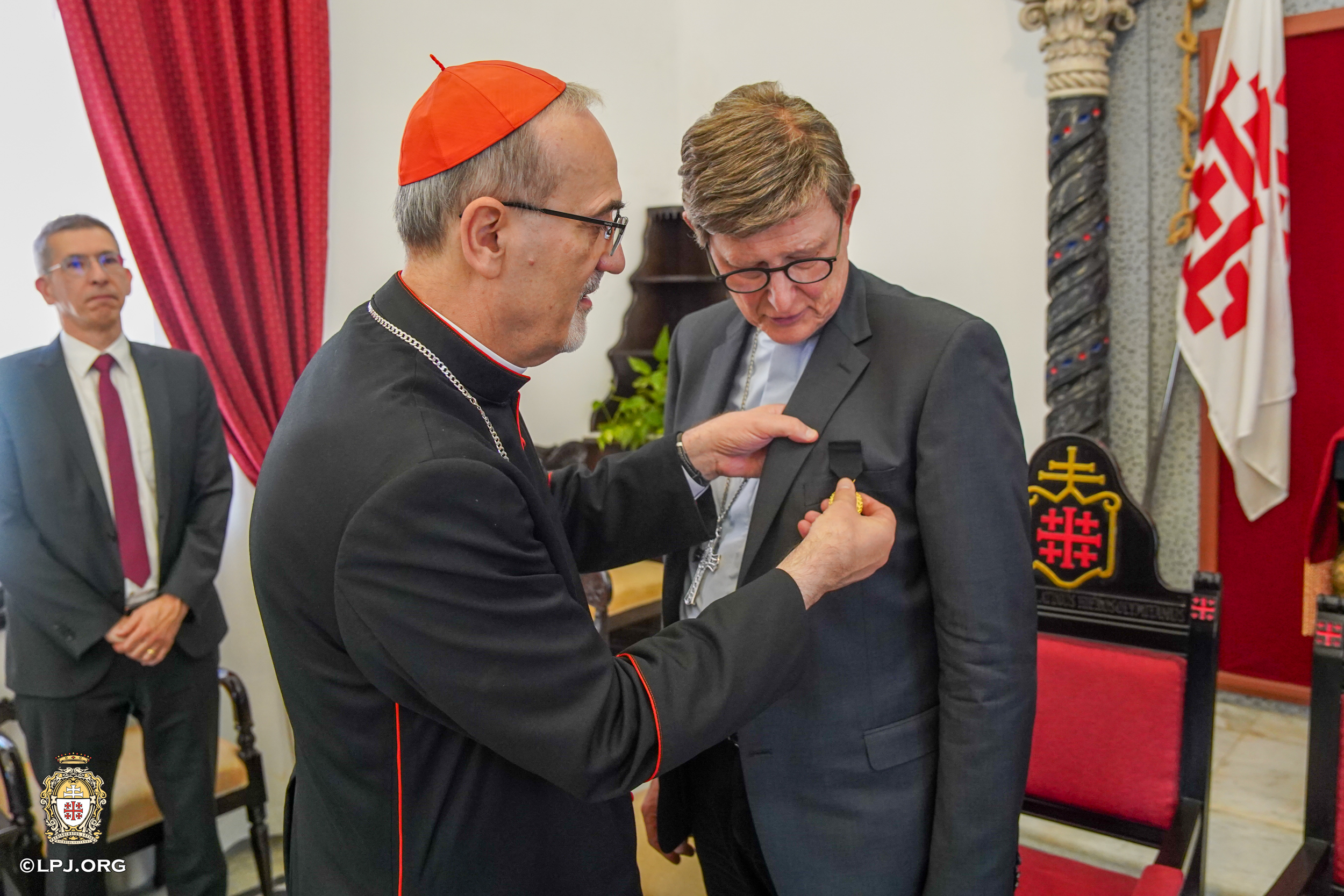
De son côté, le cardinal Woelki a exprimé sa gratitude et sa reconnaissance, soulignant que recevoir cette médaille était pour lui un grand honneur. Il a déclaré : « C’est un grand honneur pour moi de recevoir cette distinction. Au cours de cette visite, nous avons rencontré de nombreuses personnes dans le besoin qui m’ont profondément touché. Notre mission est de marcher à leurs côtés, de les aimer et de travailler avec elles en toutes choses. C’est pourquoi nous donnons notre cœur à l’Église de Jérusalem, et nous devons faire preuve de compassion et de miséricorde, comme les disciples de Jésus l’ont fait envers le peuple. »
Il a ajouté : « Nous garderons les chrétiens de Terre Sainte dans nos prières. Nous vous promettons que nous prierons pour vous et que nous serons toujours à vos côtés. »
La journée s’est achevée par la participation du cardinal Woelki, aux côtés de Sa Béatitude le cardinal Pizzaballa, à la messe solennelle célébrée à l’église de l’hôpital Saint-Louis, à l’occasion du 150e anniversaire de sa fondation.
Troisième jour
Au cours du troisième et dernier jour de sa visite, le cardinal Woelki et la délégation qui l’accompagnait se sont rendus dans la ville de Taybeh, où ils ont été accueillis par le père Bashar Fawazleh, curé de la paroisse.
Au cours de cette visite, le cardinal Woelki a souligné la nécessité pour les habitants de la Terre Sainte, en particulier les jeunes, de pouvoir rester sur leur terre natale et d’y construire leur avenir. Il a appelé à garder espoir et à œuvrer en faveur d’une solution juste fondée sur la solution à deux États.
Au cours de sa visite, le cardinal Woelki a déclaré : « Votre appel nous est parvenu, et nous avons entendu votre cri à l’aide. C’est pourquoi nous sommes ici. Nous sommes venus nous tenir à vos côtés, travailler avec vous et vous exprimer notre solidarité dans ces circonstances difficiles. »
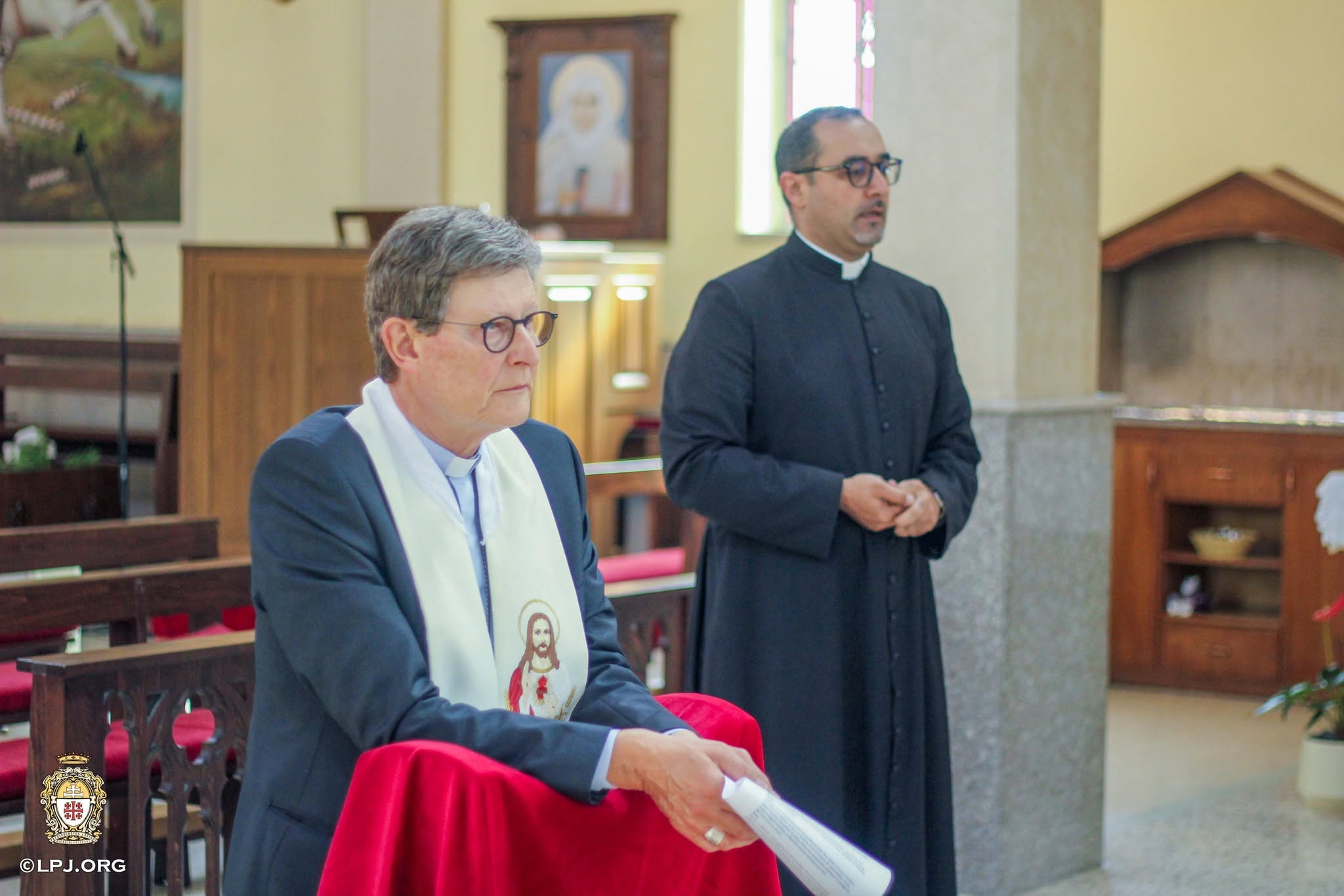
Mgr Woelki a réaffirmé la solidarité de l’Église avec les habitants de Taybeh, soulignant que la violence n’est pas une solution et que la foi, l’espoir et le travail en commun peuvent ouvrir la voie vers un avenir meilleur. Il a également évoqué la réalité difficile à laquelle sont confrontés les habitants, marquée par les attaques, les violences des colons et la poursuite de la construction de colonies, soulignant que seule une solution juste peut garantir un avenir à toutes les parties.
Au cours de cette visite, le cardinal Woelki et sa délégation ont pris connaissance de la réalité de Taybeh et des défis auxquels sa population est confrontée. Ils se sont également informés du travail de la paroisse et de ses institutions, ainsi que du rôle du Patriarcat latin dans le soutien à la communauté locale. La visite a également permis de découvrir l’église du Christ-Rédempteur, la radio Nabd Al-Hayat, l’école du Patriarcat latin, la Maison d’Éphraïm pour les personnes âgées, et a donné lieu à des rencontres avec plusieurs familles touchées.
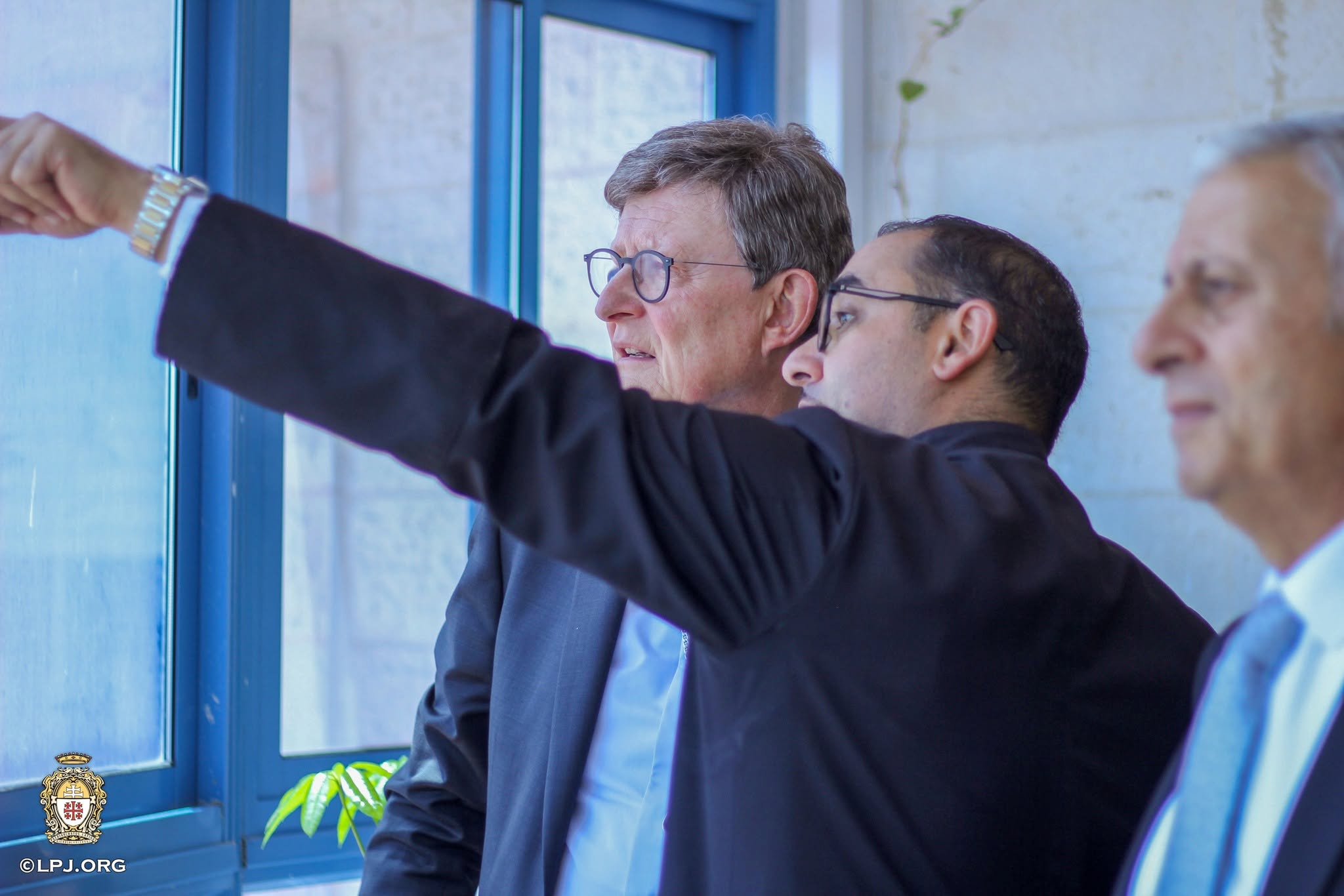
À l’issue de sa visite de solidarité, le cardinal Woelki a déclaré : « J’ai été profondément bouleversé par la situation des chrétiens en Terre Sainte. En Cisjordanie, les communautés chrétiennes vivent sous la pression constante de colons extrémistes, qui se manifeste notamment par des actes de vandalisme, des incendies criminels et des violences physiques. Les gens ici vivent dans la peur, et beaucoup d’entre eux ont déjà quitté le pays. À cela s’ajoutent les difficultés économiques, le chômage et le manque de perspectives en Cisjordanie et à Jérusalem, en particulier chez les jeunes. »
Il a ajouté : « Les habitants de cette terre m’ont profondément marqué. D’une part, j’ai été frappé par leur généreuse hospitalité et leurs profondes valeurs chrétiennes ; d’autre part, par leur courage à ne pas baisser les bras, mais à rester en Terre Sainte malgré les circonstances difficiles dans lesquelles ils vivent. »
L’un des moments les plus émouvants de sa visite a été sa conversation avec le propriétaire d’une cimenterie à Taybeh. Ce dernier a raconté au cardinal que des colons avaient détruit les machines et les équipements techniques de l’usine, ainsi que des véhicules et d’autres biens, le privant en un instant de son moyen de subsistance, mais aussi privant d’une quarantaine de familles de leur source de revenus, dont elles dépendaient grâce à l’usine.
Réfléchissant à la souffrance de ces personnes, le cardinal Woelki a déclaré : « Lorsque l’on rencontre ces gens, on sent à quel point ils sont proches des limites de ce qu’ils peuvent endurer. Ils ont besoin de soutien, et le monde ne doit pas fermer les yeux sur ce qui se passe. En tant qu’Église, nous avons la responsabilité de nous tenir aux côtés de ceux qui sont harcelés et poussés en marge de la société. »
Il a ajouté : « Nous devons nommer clairement ces situations. Lorsque des personnes sont systématiquement soumises à l’intimidation, à la ruine économique et à des restrictions de leur liberté, nous devons porter cette réalité à l’attention des responsables politiques en Allemagne, ainsi qu’à celle de nos concitoyens. »
Il a réaffirmé que l’archidiocèse de Cologne continuerait à soutenir des projets et à aider les Églises dans leur mission et leur action en Terre Sainte.