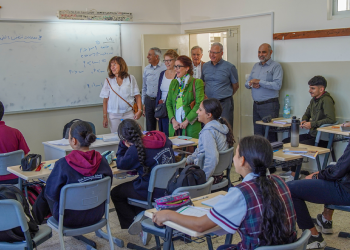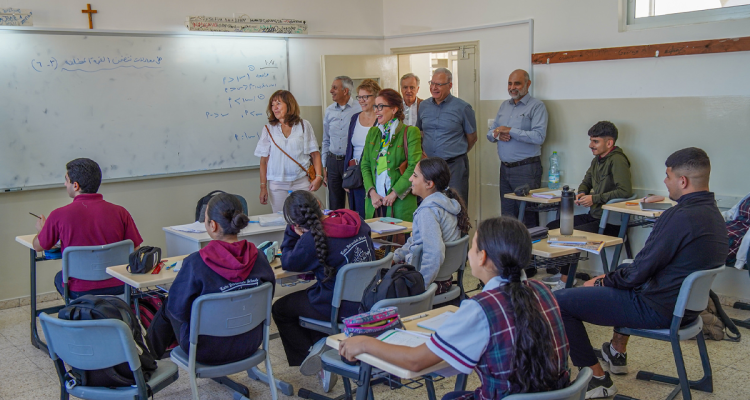

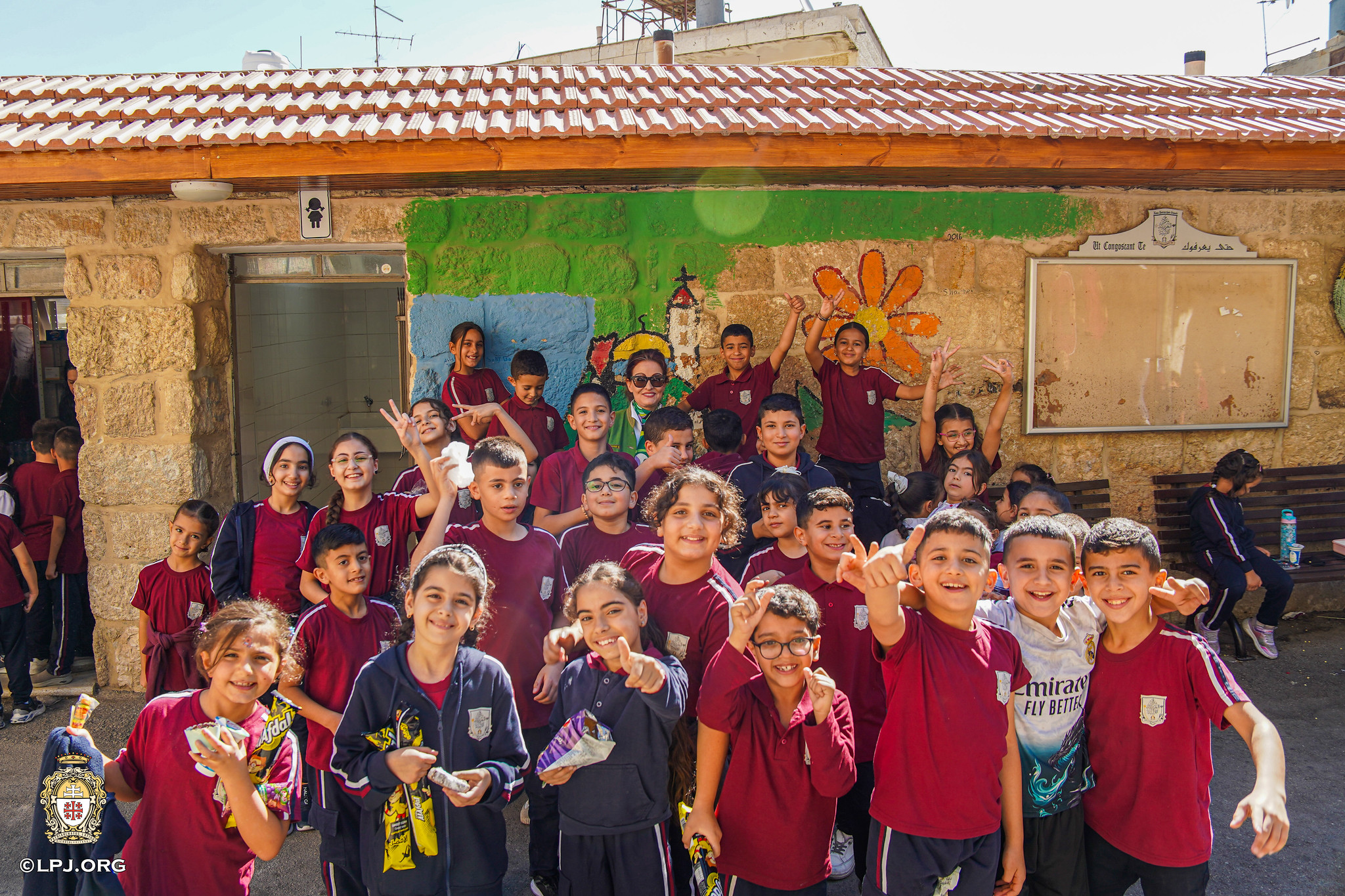
“What touched me most was seeing the young people celebrating in the school playground of the Latin Patriarchate, their faces radiant with joy and their hearts full of life.”
For Donata Maria Krethlow-Benziger, Interim President of the Holy Land Commission of the Grand Magisterium of the Order of the Holy Sepulchre, this encounter captured the heart of the Commission’s Fall visit to the Holy Land, held from October 5 to 9.
Across Jerusalem, Galilee, and the West Bank, the delegation met with Church leaders, parish priests, educators, project directors, and local communities to learn firsthand about the challenges facing the Diocese of Jerusalem and the impact of projects supported by the Order.
Accompanied throughout the visit by Mr. Johny Zeidan, the new CEO of the Latin Patriarchate of Jerusalem, the Commission reviewed initiatives spanning humanitarian assistance, education, priestly formation, employment, and pastoral care. Through its regular visits, the Commission monitors the progress of funded projects and helps determine priorities in response to the evolving needs of the Church and the communities it serves.
“In a land marked by so much suffering and uncertainty, their joy, faith and hope were deeply moving,” Donata reflected.
Responding to growing humanitarian needs
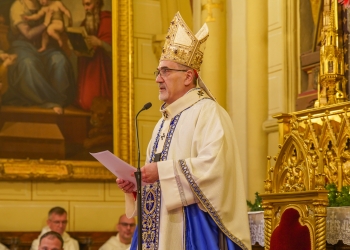
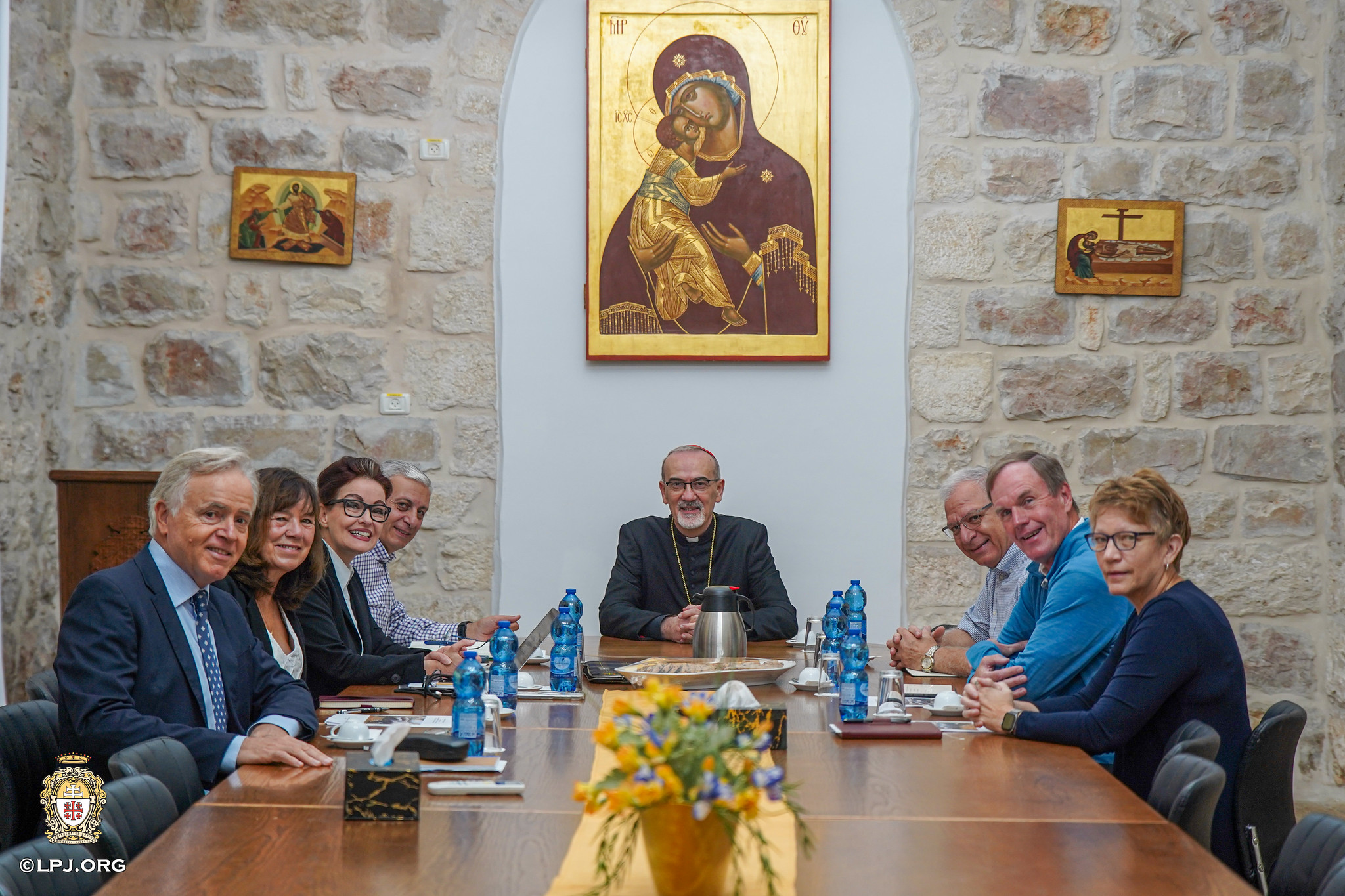
The visit opened with a meeting with His Beatitude Cardinal Pierbattista Pizzaballa, Latin Patriarch of Jerusalem, who briefed the Commission on the humanitarian and pastoral situation in Gaza, the West Bank, and Jerusalem.
In the Old City of Jerusalem, the delegation visited four Christian families receiving assistance through the Patriarchate’s Social Services Department. Their needs reflect the growing economic pressures facing local households, from unemployment and rising living costs to the difficulty of meeting school fees, rent, and other essential expenses.
The Patriarchate’s Social Services Department receives more than 270 requests for assistance each month from parishes across the West Bank. Its work includes food vouchers, contributions toward education and housing costs, emergency medical assistance, support for families facing accumulated debts, and programmes that help women and young people establish small businesses or acquire professional skills.
Beyond immediate relief, the Patriarchate also creates pathways towards financial independence through employment opportunities. By the end of September 2026, approximately 110 job placements had been provided to young men and women across Jerusalem and the West Bank through cooperation with parishes, schools, and community organisations.
One example is a young man who received support through the youth empowerment programme to purchase a small tuk-tuk for his gas-selling business in Jerusalem’s Old City. His experience illustrates how targeted assistance can become an opportunity to work, support a family, and build a more stable future.
The Commission also heard about the situation in Gaza during a video call with the parish priest. Despite the immense challenges, the Latin Patriarchate has continued its humanitarian assistance and reopened the School for the 2026–2027 academic year.
“The impact of the Latin Patriarchate is profound,” Donata said. “Through its schools, parishes, humanitarian work and pastoral care, it provides far more than material assistance: it gives families dignity, hope and the possibility of a future in their homeland.”
Through its support for projects administered by the Patriarchate, the Order helps sustain these initiatives, enabling the local Church to respond to immediate needs while continuing its long-term service to the communities entrusted to its care.
Education and formation: Investing in future generations
Education emerged as one of the central themes of the visit. In Galilee, the Commission met with Fr. Ibrahim Shomali, Director of the Latin Patriarchate’s schools in the region, who presented the work of the five schools in Haifa, Shafa’amr, Nazareth, Reineh, and Rameh. Together, these institutions serve more than 5,000 students, providing academic education alongside Christian formation and opportunities for students from different backgrounds to grow together.
In Beit Sahour, the delegation visited the Latin Patriarchate school, which serves 380 students. Its director, Anton Jaraysah, described the difficulties facing families after years of declining tourism and reduced employment opportunities. With many parents struggling to pay tuition fees, support from the Order helps the school continue its educational mission and maintain access to Catholic education.
The Order also supports the Patriarchate’s broader investment in school infrastructure through a Capital Campaign funded by the North American Lieutenancies of the Equestrian Order of the Holy Sepulchre of Jerusalem. The campaign supports projects across the Patriarchate’s schools in Palestine, Jordan, and Israel, including classroom renovations, science and computer laboratories, library upgrades, improved sanitation facilities, and essential infrastructure works.
At Bethlehem University, the Commission learned about the AFAQ (Horizons of Hope) project, implemented in collaboration with the Latin Patriarchate and the Order. Through employment opportunities and professional development, the initiative helps graduates strengthen their skills and access work in Palestine and Jerusalem, particularly in the medical, social, and economic sectors.
The delegation’s visit to the Beit Jala Seminary highlighted another essential dimension of the Church’s mission: the formation of future priests. Fr. Bernard Poggi presented the seminary’s formation programme, ongoing construction, and future plans. Alongside preparing seminarians for service in parishes and schools throughout the diocese, the seminary extends its work to the laity through spiritual formation courses across five cities.
Together, these institutions reflect the Order’s investment in the people who will shape the future of the Church and the wider society.
Sustaining the Christian presence
The Commission’s encounters also brought into focus the economic and social pressures facing Christian communities, particularly unemployment, insecurity, and emigration.
In Taybeh, the last entirely Christian village in the West Bank, Fr. Bashar Fawadleh presented local initiatives aimed at creating employment and housing opportunities to help families remain in their homeland. The community continues to face economic hardship and concerns over attacks affecting residents and agricultural land. The parish’s efforts, undertaken in cooperation with the Latin Patriarchate and the Order, seek to provide families with greater stability and a future in their village.
The delegation also visited Beit Afram, the Latin Patriarchate’s home for elderly people, where it learned about the care provided to older members of the community. In Ramallah, Fr. Yacoub Rafidi highlighted the pastoral and educational needs of local families, while in Ain Arik, Fr. Firas Abderabbo presented the life of the parish and its school, with particular attention to the challenges facing young people.
“What concerned me most was the growing economic hardship, unemployment and emigration, which make it increasingly difficult for families to remain,” Donata explained.
The visit also included meetings with Fr. Matthew Coutinho, Patriarchal Vicar for Migrants, and representatives of the Christian Youth of Palestine, including Fr. George Haddad and Ms. Faten Isayed, Secretary General of the organisation. These encounters broadened the Commission’s understanding of the diverse communities served by the Patriarchate and the importance of accompanying young people and those living in vulnerable circumstances.
Throughout the visit, the Commission also witnessed the Church’s contribution to coexistence and mutual respect through its schools, social services, and pastoral initiatives, which serve people from different backgrounds. Sustaining the Christian presence, in this context, means not only preserving institutions and places of worship, but also helping families build viable futures, educating children, caring for the elderly, and creating opportunities for younger generations.
Returning as Pilgrims
The visit reaffirmed the close partnership between the Order of the Holy Sepulchre and the Latin Patriarchate of Jerusalem. Through the contributions of its Knights and Dames, the Order provides vital support for projects administered by the Patriarchate, helping sustain its charitable, cultural, educational, and social works. The Commission’s regular visits complement this support by allowing its members to meet those responsible for the projects, understand the realities on the ground, and identify priorities for the future.
For Donata, this commitment extends beyond financial contributions to include prayer, personal presence, and pilgrimage.
“My message to the Christians in the Holy Land is simple: you are not forgotten, and you are not alone,” she said.
“We must return as pilgrims, because our presence is a powerful sign of solidarity and hope,” she added. “Your strength is an inspiration to us all and a reminder that our bond with the Holy Land is not simply one of charity, but a living dialogue of love.”