26 July 2026
XVII Sunday in Ordinary Time, Year A
In the parables we have heard over the past Sundays, the Kingdom of God always appears as a reality that needs time. It is not born complete, nor does it reveal itself in an instant nor impose itself; It grows slowly, quietly, and often invisibly. The Kingdom unfolds in a process of growth and patience, as a reality that asks to be nurtured and calls for trust.
Today’s Gospel passage (Mt 13:44–52) is set within this same context.
We have reached the end of chapter 13, where Matthew recounts the last three parables of the Kingdom: the hidden treasure (Mt 13:44), the fine pearl (Mt 13:45–46), and the net (Mt 23:47–50).
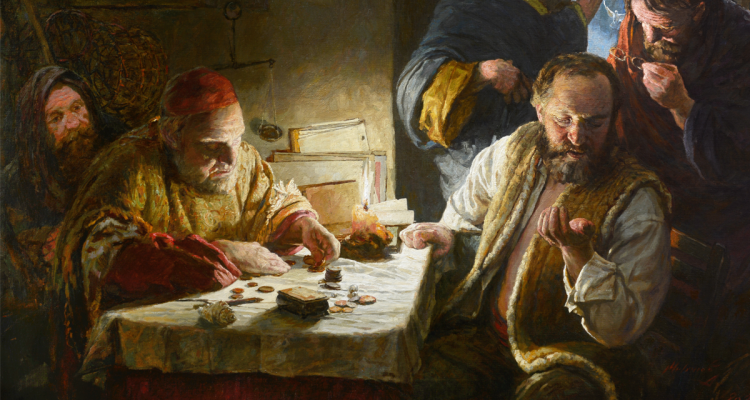
In the first two parables, the Kingdom is likened to something very precious, which radically changes the life of the person who finds it, to the point that they sell everything to take possession of the treasure they have found.
Some seek it, like the merchant; others find it unexpectedly, like the man who discovers it in his field. For both, once they have found it, their lives change completely. Having found the treasure or the pearl, they sell all their possessions to buy what they have found (Mt 13:44–45).
Let us pause on two points.The first is that the treasure and the pearl must be found. They are hidden, and someone finds them. This is not merely a narrative detail. The verb Matthew uses to describe the treasure as "hidden" expresses a permanent condition rather than a past event.
The treasure is hidden by its very nature, not by chance, because such is the Kingdom of God: it does not impose itself, it does not make a spectacle of itself, it does not occupy space or place itself on display.
Indeed, the treasure is hidden in the field, that is, in everyday life. It is not found in a temple, it is not in a sacred place, nor within some extraordinary setting.
Moreover, the treasure is hidden because it is a gift, not a conquest. The farmer does not search for it; he comes across it unexpectedly. This means that the Kingdom precedes any human initiative, and that discovering it is an act of grace, not a reward for merit. We do not create the Kingdom, but we receive it. The treasure is hidden because the Kingdom is a gift given, not something to construct.
The Kingdom, then, always remains somewhat hidden because it is never something obvious or measured by human standards: It must always be found and rediscovered, even when it has already been found once (… both the new and the old…- Mt 13:52).
This is the first Good News proclaimed by this passage: God allows Himself to be found. He is hidden, yet not distant. Those who keep walking, those who continue seeking, those who remain on the journey, will one day, unexpectedly, find him.
The second point is that, for those who find the treasure, a new era begins.
Indeed, the two parables highlight three stages in the story of every human person—three moments, all of them necessary if the Kingdom is to bear fruit in one's life.
The first is the stage of discovery. It is an unexpected moment, a kairós that interrupts one's life. It is not something a person prepares for, at least not entirely, above all it is a gift, a surprise, an epiphany. Then, comes the stage of leaving behind: between discovering the treasure and making it one's own, lies an interval - a decision - the stage when the discovery becomes a choice, and everything else takes a back seat: one must freely choose to sell everything in order to gain the treasure that has been found.
Finally, comes the stage of belonging, of receiving: what you have found, what you have chosen, becomes yours; it becomes part of you, part of your life. Such is the Kingdom: first it surprises, then it calls, then it gives itself completely and transforms everything.
All three stages, then, are indispensable. Discovery, without transformation remains fruitless. Transformation, if it is not accompanied by a spirit of welcome, becomes disheartening. And receiving, without the wonder of discovery becomes routine.
In truth, however, these three stages are never distinct seasons of life, like chapters that close one after another. Discovery continually happens anew, just as there is always a time to leave everything and make room for the new that is being revealed. And there is always time for a new communion with the Lord, because the Kingdom is not possessed like an object, but as a relationship that grows. “Then every scribe who has been instructed in the kingdom of heaven, is like the head of a household, who brings from his storeroom both the new and the old.” (Mt 13:52).
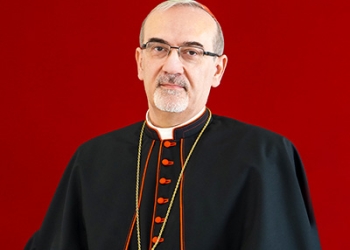
+Pierbattista
*Translated from Italian