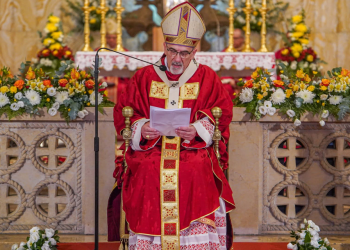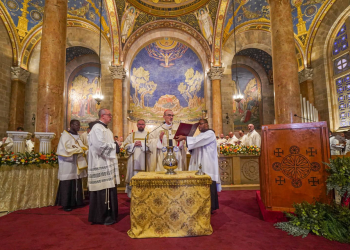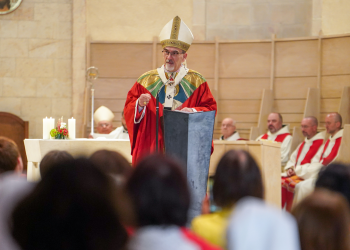
Homily for the Priestly Ordination of Br. Nicolas
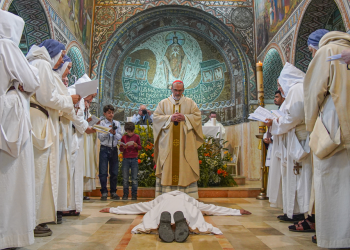
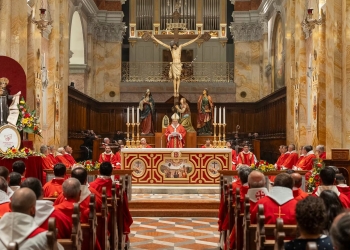
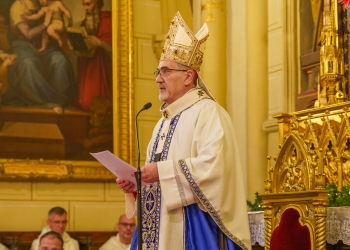
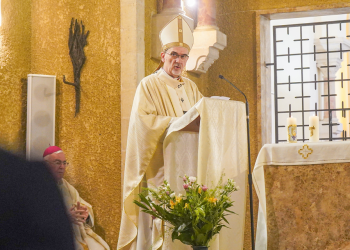
Deir Rafat, 23 October 2026
Gn 14:17–20; 1 Pt 2:21–25; 3:18; Jn 17:11–19
Dear Brother Nicolas,
Dear brothers and sisters,
"For them I consecrate myself"
Jesus addresses these words to the Father. He speaks of His own consecration and of the disciples. For him, to belong to the Father means the giving of Himself for them. It is a single love that encompasses His entire life.
Dear Nicolas,
Today, you are called to enter into this gift. The priesthood you receive is directed towards this very purpose: it is for them. So that others may encounter the Lord, receive His forgiveness, and be nourished by His life.
First, however, there is something we must remember: you are also a included in the "for them”. Jesus offers Himself for you as well. His love for you does not begin today, because you are becoming a priest. You are here because His love has reached you and led you to this day.
You will need this certainty. When your ministry brings you consolation, and when it makes you more aware of your own limitations, you will need to remember that you are not merely the one who must give. First and foremost, you are a man for whom Christ gave Himself. You will be able to live for others while continuing to receive this love.
"For them I consecrate myself"
In the word “myself” lies the full depth of Jesus gift. He does not offer something that belongs to Him. He offers His very self. The gift is not separate from Him, as if it's something He must attend to, rather it becomes the very form of His existence.
Here, too, there is a question for us. We can give a lot while keeping ourselves guarded. We can dedicate our time, carry out a service well, and be faithful to our commitments, yet still preserve within ourselves a space into which we allow no one to enter. We do what is asked of us, but only with the condition that it does not interfere too much with our habits, our judgments, or the way we have decided to live.
Jesus’ words reach us precisely there. He invites us to allow our encounters with our brothers and sisters to change us.
I think of someone who asks to be heard. We can give that person a proper response while our minds are elsewhere. Or we can pause, accept that we don’t immediately know what to say, and give them time to express what’s in their heart. On the surface, we may seem to have done very little. Yet we have offered ourselves: our attention, our willingness to let another person’s life touch ours. This is how that “for them” begins to become real. It takes on the face of the people entrusted to us, not the people we would have preferred to meet.
In your monastic life, Nicolas, there will be many days that feel repetitive. You will not always have something new to do or a fruit of your work to rejoice in. And yet, every day you will be able to choose how you are present: whether to go through your usual tasks thinking primarily of yourself, or to live them with an open and willing heart. A humble service, one that no one notices, can contain a great deal of love. And an important task can still leave us focused solely on ourselves.
That is why the decisive question will not be merely, “What did I do today?” but rather, “For whom did I live?”
This is not a question that can be answered once and for all. Today you renew the “yes” you pronounced years ago when you made your religious profession, and now you say it again for the rest of your life. But you will come to understand, day by day, what you have promised today. There will be encounters that will give that “yes” a depth you cannot yet fathom. There will be hardships in which you discover how difficult it is to continue to give of yourself without demanding that others meet your expectations.
Is this perhaps one of the truest tests of self-giving: when the good we have sought to do is not understood, when we do not receive the response, we had hoped for? Then we are tempted to withdraw, to do only what is necessary, to no longer get involved. Jesus’ “for them” invites us not to close our hearts. To acknowledge our struggle, certainly, but without turning it into a decision to stop loving.
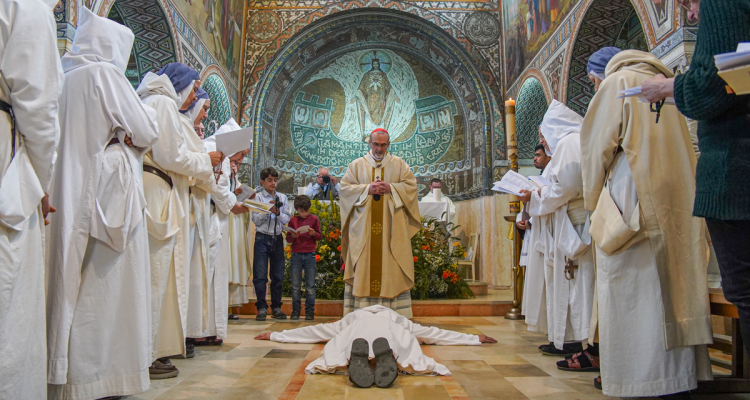
In a few moments, I will place the bread and wine for the Eucharist in your hands and say to you: “Imitate what you celebrate.” This is how that “for them” will enter into your life as a priest.
At the altar, you will say the words of Christ: “This is my body, offered in sacrifice for you.” It will be He who gives Himself, and you will be the minister of His gift. That “for you” will reach everyone, including you. The priest does not remain outside the love he celebrates.
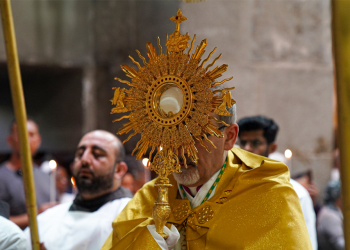
Allow yourself to be nourished by what you give. Do not become so accustomed to it that you are no longer amazed that the Lord continues to place Himself in our hands, to become our food, and to desire that we remain united to Him. Your fidelity will require your commitment, but it cannot be sustained by that alone. You will need this communion, and you will need to return to the Lord just as you are, even when you have little to offer Him.
“Imitate what you celebrate” means allowing the Eucharist to shape your days. The gift you have celebrated will accompany you when you return to your daily tasks. It will help you recognize, in the people you meet, someone for whom it is worth spending your time on, setting aside personal preference, and starting over after a misunderstanding.
This will also happen through your own poverty. You do not need to wait until you have no more flaws to begin giving yourself. We can learn to love by learning to ask for help, acknowledging a mistake, and giving up the need to defend ourselves at all times. Through this too, we can offer ourselves: not the image of ourselves we would like to present to others, but our real lives, open to the work of God.
Dear Nicolas, do not think, however, that you are being asked to become indispensable. The ministry of Christ is entrusted to you, first and foremost, so that His life may reach your brothers and sisters. There will be fruits that you see and others that remain hidden. But each day, you will need to become more aware that you can give thanks for the good the Lord accomplishes, even when he works through others rather than through you. You can be present with your whole self without needing to be at the center.
This is what we ask for you today: that, over the years, your heart may remain open and available; that this gift may not become merely a memory of the beginning; and that, in the Eucharist, you may rediscover each day the love from which all things began.
One day, you will look back on this celebration. Perhaps many words will be forgotten. I pray that the words of Jesus will remain with you and that you may see them in the life you have lived: "For them I consecrate myself "
May this not be merely a phrase heard today, but the simple truth of your daily life.
May the Most Holy Virgin, whom we honour in this sanctuary, intercede for you and accompany you always.
Amen.