Homily for the Solemnity of All Saints
Monastery of Saint Clare, Jerusalem · 1 November 2026
Rev 7:2-4, 9-14; 1 Jn 3:1-3; Mt 5:1-12
Dear Sisters, dear Brothers,
“Beloved, we are God’s children now; what we shall be has not yet been revealed” (1 Jn 3:2). These words from the second reading sum up our entire Christian life: a gift we have already received and a promise that awaits to be fullfilled. We are God’s children now, with the faith and struggles we bring with us today into this church. And we are journeying toward a fullness we do not yet know: to see God, and to be like Him.
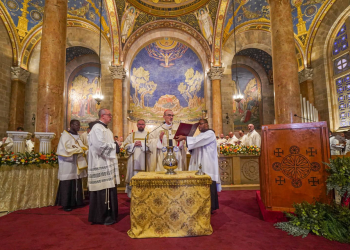
We celebrate All Saints day here in this monastery, where, after Mass, the diocesan phase of the cause of the cause for beatification of the Servant of God, Sister Maria of the Trinity will come to a close. Her experience accompanies us as we listen to the Word and helps us recognize how it can transform a life.
John first invites us to look: “See what love the Father has bestowed on us” (1 Jn 3:1). This is a perspective we need to rediscover. We are accustomed to measuring our worth by what we can do, by the expectations of others and by the results of our work. Even in our spiritual life, we can end up judging ourselves only based on what we lack. The Word invites us to recognize ourselves as beloved children and to live in the trust that springs from this relationship.
Sister Maria spent a long time searching for where she could respond to the Lord’s call, experiencing rejection and misunderstanding, while carrying her own fragility. At the end of the account of her vocation, she writes: “Here is the story of my weaknesses and of the Lord’s mercy.” Looking back, she recognizes a mercy that accompanied her even when she did not understand where she was being led. This is how holiness grows: within our humanity, when we allow God's love to transform it.
In one of her prayers, she recalls having come to Jesus to ask for favor. Then she adds: “I stayed to love you well” (Colloquio, 339). We continue to ask, because we need help in this life, and in the process, we discover a desire to be with Him. His presence becomes more precious even when our questions remain unanswered. Silence turns into listening, and through listening we learn to recognize what the Lord desires to accomplish in us.
“What we shall be has not yet been revealed.” There is an incomplete aspect of our journey. We believe in the Father's love, yet we defend ourselves, we fear losing what we have and struggle to trust. We can bring this distance into our prayer. The Lord continues to work in our lives; His faithfulness allows us to recognise honestly where we are and to set out on the journey again.
The first reading allows us to contemplate the fulfilment of this promise. The great multitude in the Book of Revelation stands before the throne of God and before the Lamb. It is made up of people from every nation, tribe and tongue. This is what salvation looks like: a communion in which no one must erase their own history to belong to God.
Here in Jerusalem, this vision touches us deeply. Here, we know how much a sense of identities and allegiances can divide us, and how difficult it can be to recognise one another when our memories have been wounded. The liturgy offers us a glimpse of God’s vision for the future, and that future guides our choices today. If there is a place for all people before the Lamb, then we are called, even now, to make room for others in our prayer and in the way we fulfil our responsibilities.
That multitude comes out of the great tribulation. The saints have known trials and have washed their robes in the blood of the Lamb. Their lives have been touched by the Paschal mystery of Jesus, by His love that forgives and saves. It is this love that has sustained them and enabled them, in turn, to offer themselves.
Here we can understand a central aspect of Sister Mary's vocation. Through her “vow of victimhood”, she desired to unite herself to Christ's offering and to share in His love for the salvation of humanity. In the Colloquio interiore (Interior Dialogue), this offering is closely linked to the Eucharist. Jesus gives Himself and remains among us. By receiving Him, we learn to make room for him in our lives, so that His love may reach others through us. For her, this willingness took shape in her service to her fellow sisters, in prayer and in the patience she showed in her daily relationships.
A passage from the Colloquio clarifies the meaning of this journey: “he soul that honors me most is not the one that has suffered the most,” but, it continues, “the one that has best transformed all its sufferings into love and joy” (Colloquio, 637). Suffering can wound us deeply; it can even harden our hearts. To pass through it, we need help. United with Christ, we can entrust to Him even the things that weigh us down and receive from Him the strength to continue loving.
In this light, let us listen to the Beatitudes. Jesus looks upon the poor, the afflicted, and those hungry for justice, and proclaims the Kingdom to them. His promise opens up a future within situations that seem to offer no way out: they will be comforted, they will be satisfied, they will see God. These words bear the face of Jesus, meek and merciful, faithful to the Father even in times of trial. To follow Him means learning from Him how to live through whatever we may face.
“Blessed are the pure in heart, for they shall see God” (Mt 5:8). The Psalm also speaks to us of innocent hands and a pure heart. The desire to see God involves both our inner life and our outer deeds. Sister Mary links purity of heart to the humility of acknowledging one’s own sin: honesty opens us to mercy. A heart becomes pure when it stops constantly justifying itself and accepts its need for forgiveness, and asks for it. Our way of looking at others can then also change: those who recognise their own need for mercy learn to show mercy to others
“Blessed are the peacemakers, for they will be called children of God” (Mt 5:9). The word with which we began returns: children. Working for peace makes our likeness to the Father recognizable. Sister Mary writes down the invitation to offer “an act opposed to evil” (Colloquio, 533). This is how she understood reparation: by uniting herself to the love of Christ. In the face of words that humiliate, we can restore dignity; in the face of someone who is excluded, we can draw near. The pursuit of justice calls us to protect those who are wounded and to preserve a heart capable of still recognizing the humanity in everyone.
In the Colloquio, we also find these words: “You never come before God alone: in your soul there is the Holy Trinity, and there is also a fragment of the whole Church” (Colloquio, 640). Sister Mary saw herself as part of a communion: she has received through others, and her response may help people she will never know. This is the mystery we celebrate today. Your prayer, too, brings before God the people and the wounds of this city. Every act of reconciliation lived among you, every act of faithfulness preserved amid hardship, belongs to the life of the whole Church. The Lord knows the fruitfulness of what you entrust to Him.
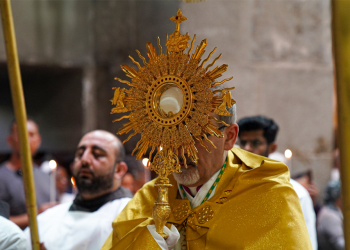
In a few moments, we will receive in the Eucharist the Lamb who gathers this multitude and nourishes with His own life. Let us bring to the altar all that we are, with our questions still unanswered and with the people entrusted to our care. Let His gift make us more open to love. May the Father, who calls us His children even now, accompany us until the day when we shall see Him as He is. Amen.
*Translated from the original in Italian