
June 28, 2026
XIII Sunday in Ordinary Time, Year A
This Sunday, we continue with Jesus’ missionary discourse: we read the conclusion of this discourse, Matthew 10:37–42.
The passage begins with a few words that lead to a very important reflection.
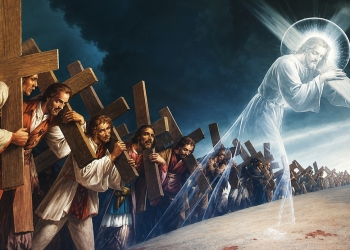
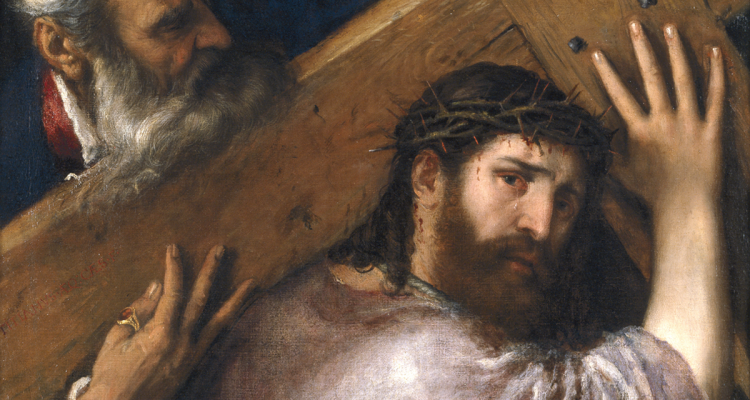
Jesus in fact says : “Whoever loves father or mother more than me is not worthy of me, and whoever loves son or daughter more than me is not worthy of me; and whoever does not take up his cross and follow after me is not worthy of me.” (Mt 10:37–38).
Three times, Jesus reminds his disciples that they might not be worthy of him.
What does this mean?
The entirirety of Chapter 10 emphasizes a fundamental point: the mission the desciples are called to is not a task, it is not something that awaits to be done, or a strategy to be carried out.
It is a communion of life and love, lived by the disciple in union with the Lord; it arises from sharing His compassionate gaze toward humanity, and is accomplished by bringing His very message of salvation to all.
Over the past few Sundays, we have heard that Jesus invites us not to be afraid, because the lives of the disciples are precious in the eyes of the Father; they must not worry about what they are to say, because the Holy Spirit speaks through them.
In sum, it repeats, in different ways, a single truth: that the lives of the disciples are precious in the eyes of the Lord; that they are worthy of Him.
The disciple is so worthy of his Lord that he is empowered to live not only His life, but even His death. He is worthy to live His very life, to the point of the total gift of self, just as the Lord did.
This, then, is the meaning of Jesus’ words.
The disciple testifies first of all to this: the immense honor, which preceeds the desciple and is bestowed upon him freely.
It is an honor that does not come from one's own merits or abilities, but from one's participation in the life of the Son and sharing in God’s way of being—which every disciple is called to make visible and in one's daily life.
There is a risk, however, and it is that of losing this honor, of straying, of “not being worthy”, as Jesus says.
One does not lose it by making a mistake or committing a sin, if anything, that is the very place where the disciple can experience even more deeply the gratuitousness of a mercy that unites him to the Lord.
The issue runs deeper than that.
Jesus says that whoever loves one's parent, child, or even self more than Him is not worthy of Him.
What does this mean?
Let’s start by clarifying what it doesn’t say.
Jesus isn’t saying not to love your relatives, nor is He saying to love them any less than you love Him.
Because when you love, you don’t measure, calculate, or weigh things up.
Nor is Jesus asking to love Him in a way that excludes others, forgets them, or fails to care for them.
Jesus is saying that our capacity to love comes from Him first, as a gift.
It is through our relationship with Him that makes all other love possible.
Without this foundational relationship, love risks turning into possession, alienation, slavery, and abuse.
If, on the other hand, our lives are founded on our relationship with Christ, then we gradually become capable—indeed, “worthy”—to love everyone as Jesus loves; to carry the cross as He carries it.
With this in mind, we can also interpret the concluding verses of today's passage (Mt 10:40–42), which also bring the entire missionary discourse to a close: “Whoever receives you receives me … whoever gives only a cup of cold water…”
Whoever welcomes the disciple welcomes the presence of the Lord, who has made them worthy to love as He does.
And for this reason, they will receive a reward far beyond measure, infinitely greater than what they have given to the missionary they welcomed: for their reward will be this very communion they have received given to another, a communion that continious to spread and reach even through a single act of kindness.
+Pierbattista
*Translated from Italian