1 November 2026
Solemnity of All Saints
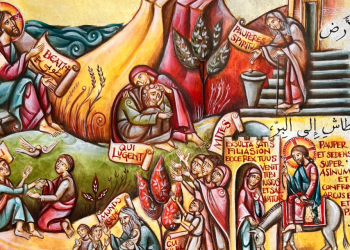
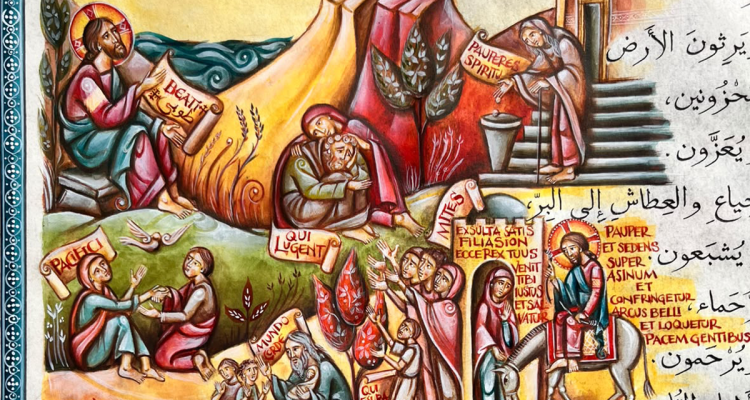
The Solemnity of All Saints, which falls this year on a Sunday, invites us to reflect on the Beatitudes (Mt 5:1–12), a familiar passage we have reflected on many times. Today, we will focus on only one aspect, from a particular angle: the word reward, which we have encountered many times throughout this year’s liturgical readings. Jesus uses it at the end of today's passage: “Your reward will be great in heaven” (Mt 5:12).
Matthew often uses this word in his Gospel. However, it should not be understood as financial compensation or as a prize that a person earns based on their own merits. Rather, we can understand it as the fulfilment of our relationship with God, which begins when you open yourself to the freely given gift of the Father’s love and allow this gift to transform your entire life.
The phrasing of the Beatitudes might suggest a cause-and-effect relationship: if I behave in a certain way, if I am poor in spirit, meek or merciful, only then will the Father give me what I deserve, as if these were “things” that God owes to Man.
But God is completely free: His love cannot be bought with our merits. It is a love which calls upon our freedom and awaits a response. The gratuitous nature of this gift makes our response possible and precious.
Thus, the Beatitudes reveal how a life can be transformed when it welcomes the Kingdom of God and entrusts itself to His promises.
We will focus precisely on these promises, which we find in the second part of each Beatitude. What kind of reward is meant here?”
Jesus promises the Kingdom of heaven (Mt 5:3, 10), consolation (Mt 5:4), the inheritance of the earth (Mt 5:5), satisfaction (Mt 5:6), mercy (Mt 5:7), the vision of God (Mt 5:8), and being called children of God (Mt 5:9).
If we look closely, we realize that these gifts concern every aspect of human life and draw us ever more deeply into communion with the Father.
When Jesus promises the Kingdom to the poor in spirit, consolation to those who mourn, and the inheritance of the earth to the meek, He is not announcing that God will intervene from the outside to resolve their situation. He is revealing that precisely in these circumstances, often regarded as signs of weakness or failure, a person can open themselves to God's action and welcome His way of governing.
The reward is not something that God possesses and gives away. Rather, it is God Himself; to have a living relationship with him.
This means that those who live according to the logic of the Kingdom live more deeply in the reality of the Kingdom.
When, for example, Jesus says that the merciful are blessed for they will receive mercy (Mt 5:7), He does not mean that if someone shows mercy to others, God will then show in return mercy to them.
This means that the merciful person has already entered into God’s way of thinking and acting. The mercy they receive is not simply a future reward, but rather the relationship with God that is welcomed and becomes part of one's life.
In short, it is a relationship that reaches its fullness where God's way of acting also becomes, day after day, the Christian's way of life. Our mercy does not buy God's mercy: it flows from His love, welcomed and made part of our lives.
Those who allow themselves to be forgiven learn to forgive. And it is precisely by showing mercy to others that they enter more deeply into the gift they have received, confidently awaiting the ultimate fulfilment of the mercy promised to them.
The same is true of meekness. Clearly, meekness is not a condition that enables a person to take possession of the earth (Mt 5:5). Rather, meekness makes a person capable of receiving all that God wishes to give them.
The meek person gives up relying on strength and domination as the source of their security in life. Even in relationships with others, he or she learns to make room for others without always having to assert themselves. They entrust their future to God and His promises. In this way, meekness transforms the heart, making it capable of receiving and sharing what has been entrusted to it. It also opens the heart to the hope of a new world.
But the Beatitude that gives light to all the others is perhaps that of the pure in heart, for they shall see God (Mt 5:8).
For if the reward were simply something that God distributes, this Beatitude would be surprising. If, instead, the reward is a relationship, then it becomes the culmination of the entire discourse.
For the path of the Beatitudes leads ultimately to the vision of God.
Perhaps this is precisely where the Gospel challenges us. Many people desire God's gifts: consolation, peace, forgiveness and eternal life. But the Beatitudes promise something more and something different: they promise God himself.
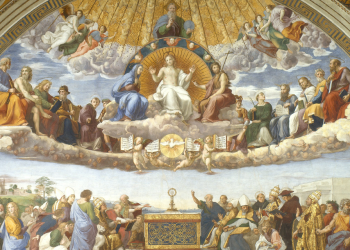
The solemnity we celebrate today invites us to contemplate the saints as those in whom this promise has been fulfilled. They welcomed the Father’s love into their lives and allowed it to transform their way of living. Now they see the One in whom they have believed.
Their joy sustains our hope: “we shall be like him, for we shall see him as he is” (1 Jn 3:2). The communion we are learning to live today, amid the fragility of our present lives, will find its fullness in Him.
+Pierbattista
*Translated from Italian