By Emiliano Eusepi
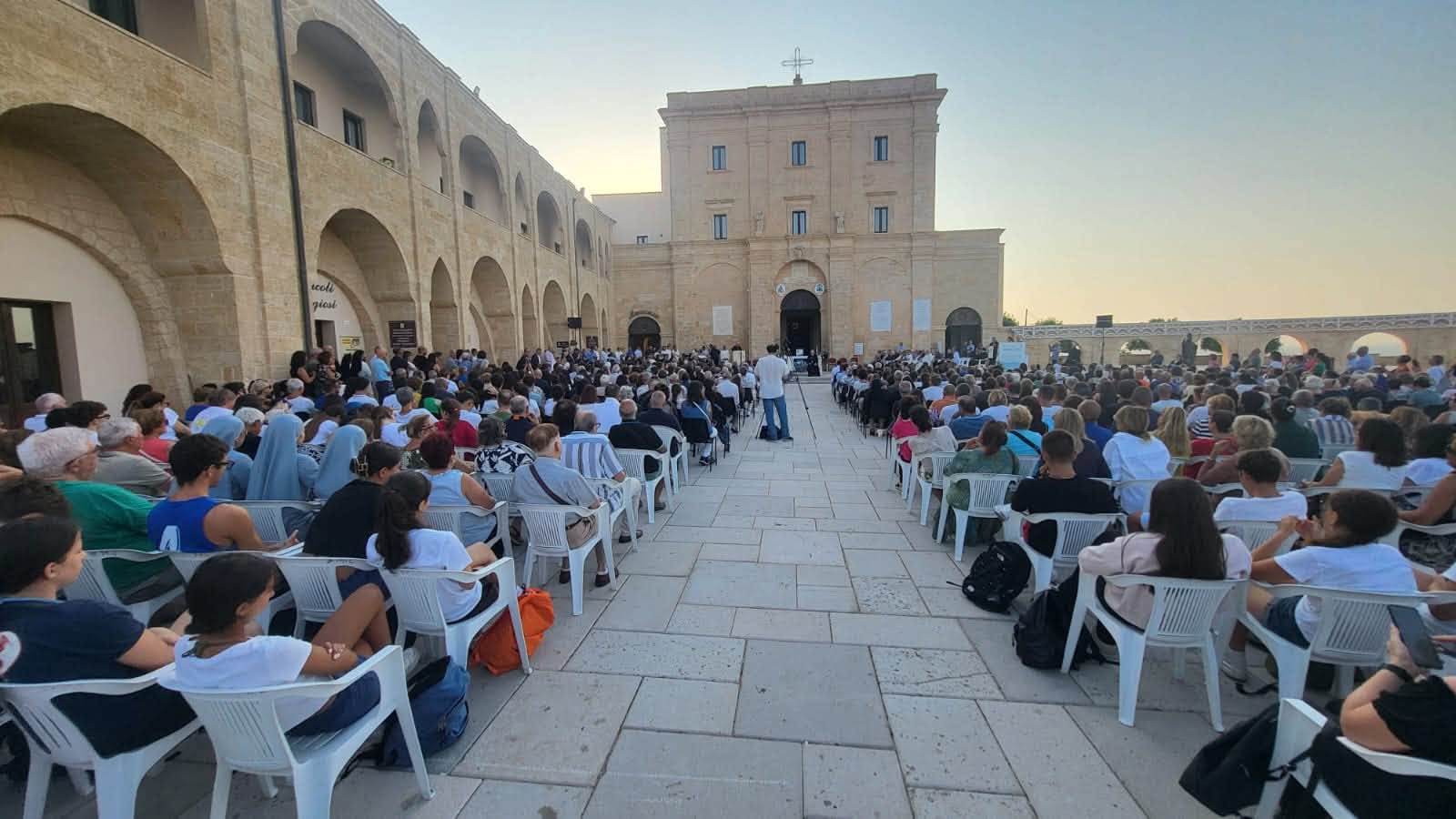
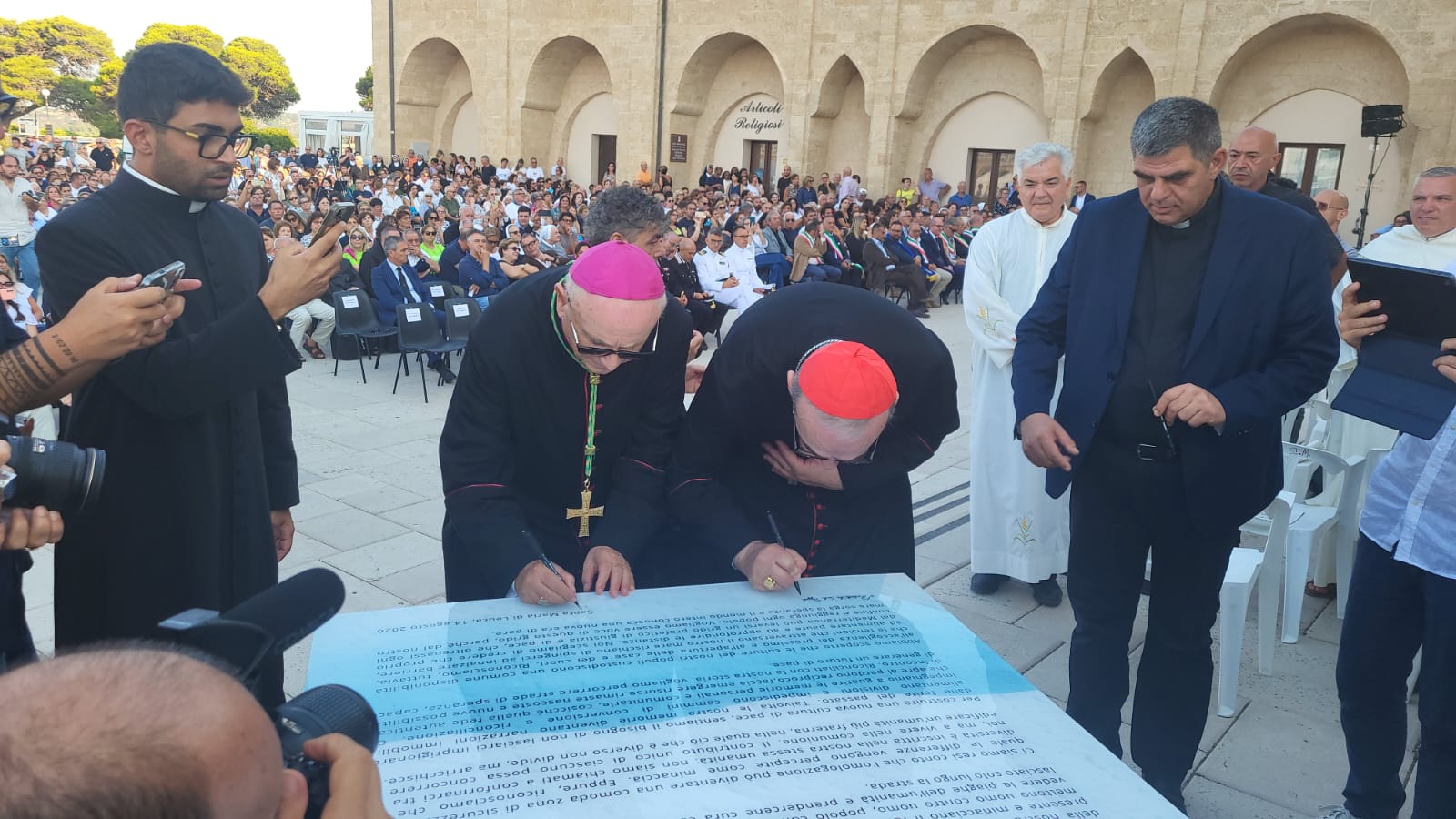
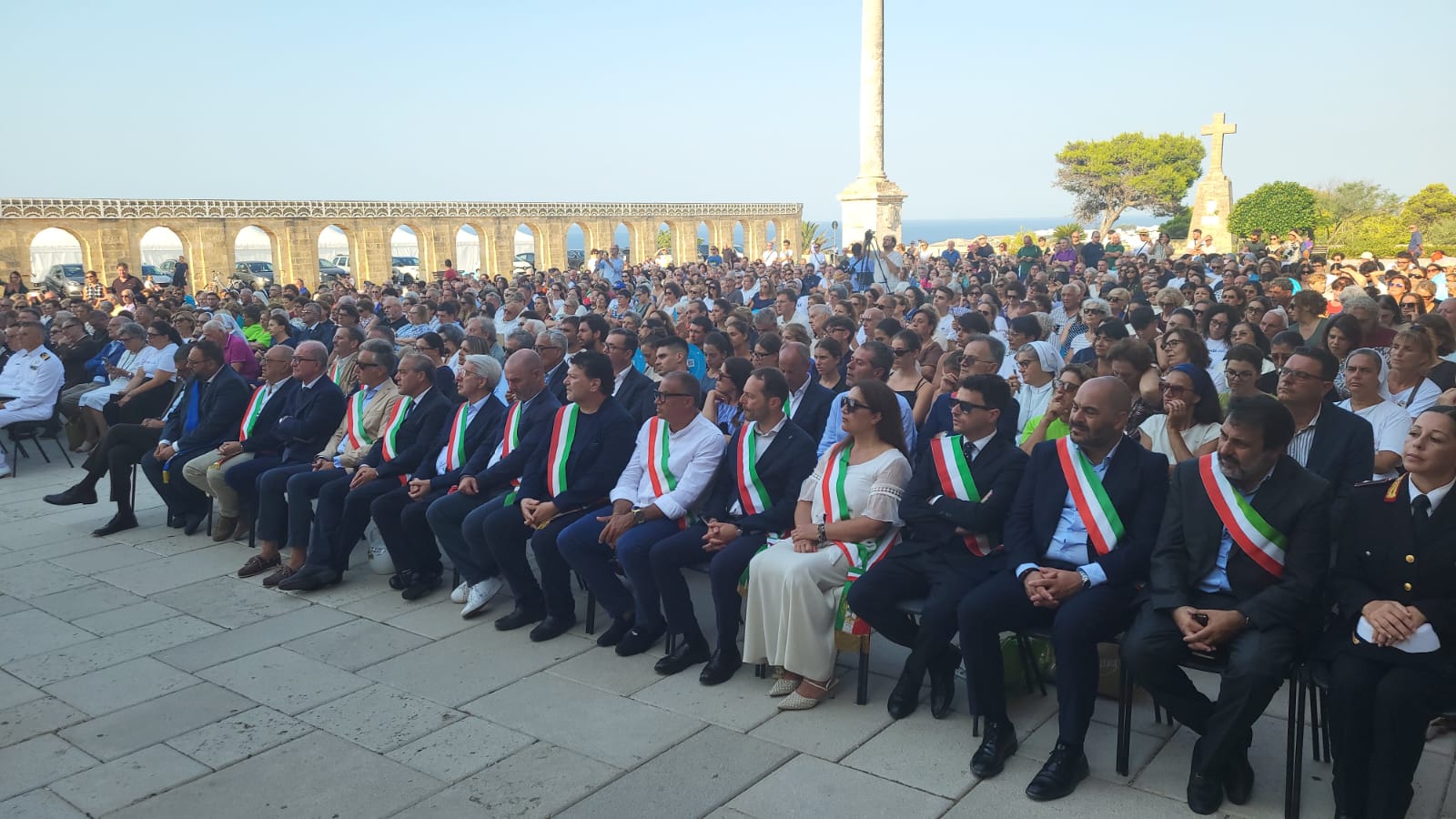
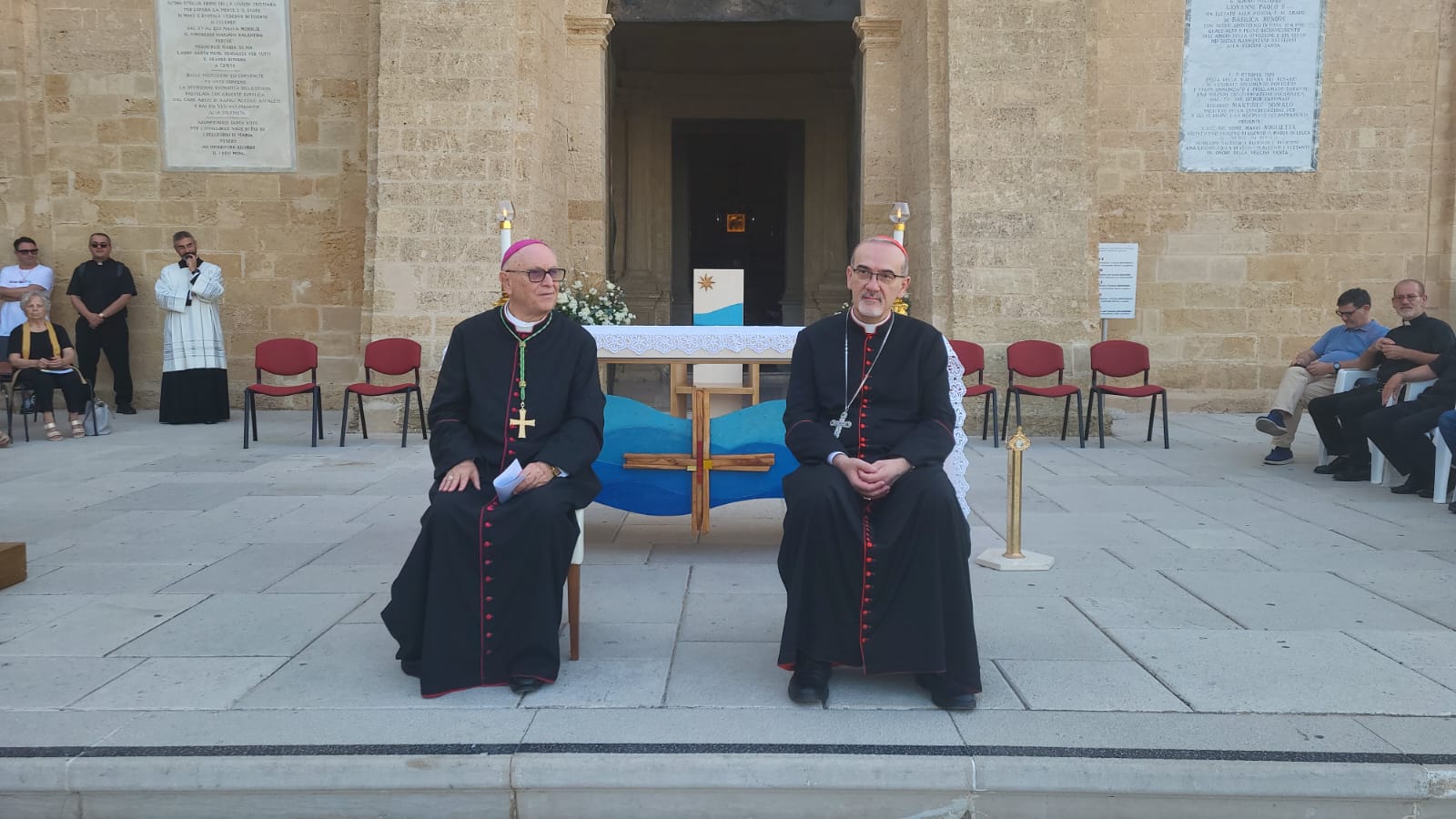
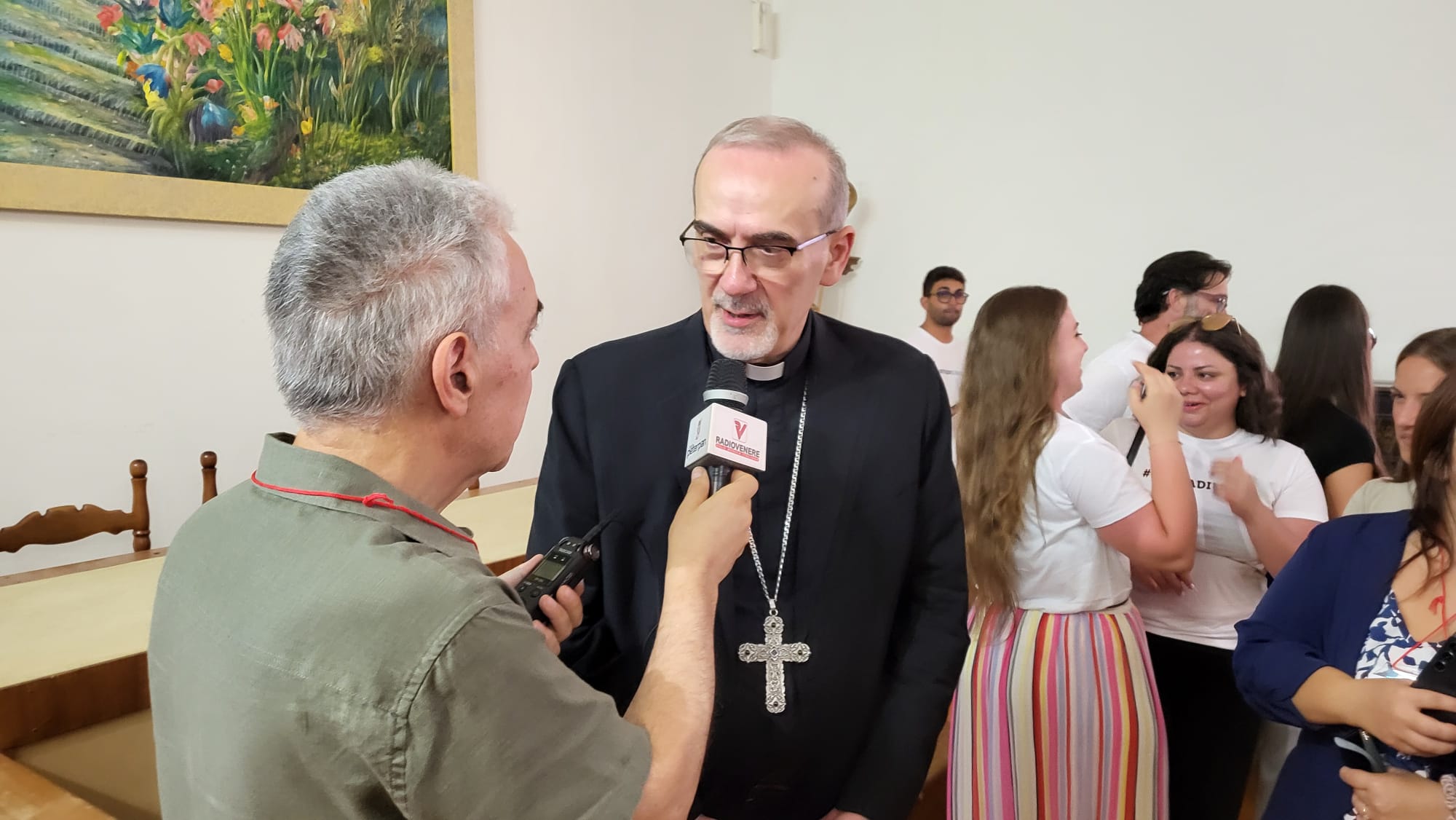
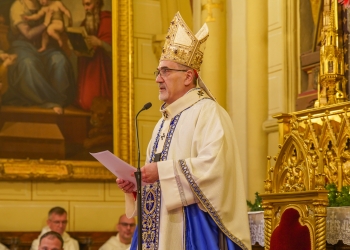
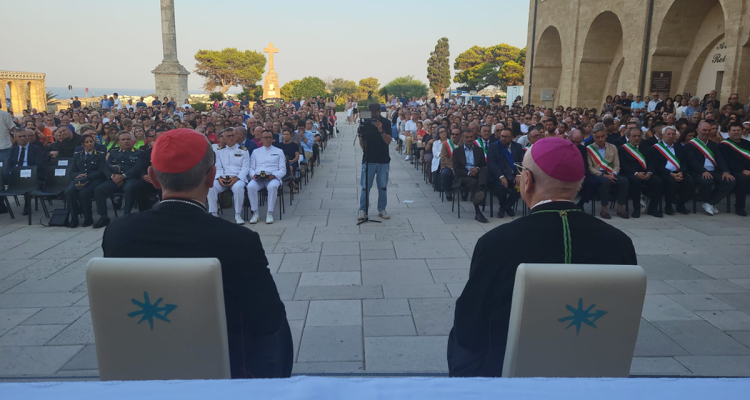
The Patriarch Pierbattista Pizzaballa, Latin Patriarch of Jerusalem, made a significant visit to Puglia from 12 to 14 August. The journey was marked by a series of encounters, beginning with a moment of reflection and prayer in Monopoli on 12 August, continuing in Alessano to remember the prophetic example of Bishop Tonino Bello, an authentic witness to peace, and concluding in Santa Maria di Leuca, where the Patriarch met with young people from across the Mediterranean.
The visit was not merely an institutional engagement, but also a profound and deeply felt reflection on the human condition.
The visit began on 12 August in Monopoli, where the Patriarch was welcomed by a large community in an atmosphere of deep listening and prayer. During this first stop, the Patriarch emphasized the importance of the bond between the Churches of the Mediterranean, inviting the faithful not to close themselves within their own suffering, but to keep their gaze fixed on the universal dimension of the tragedy unfolding in the Holy Land.
This first encounter laid the foundations for the central theme of the entire journey: the need for an openness to others capable of reading the signs of the times.
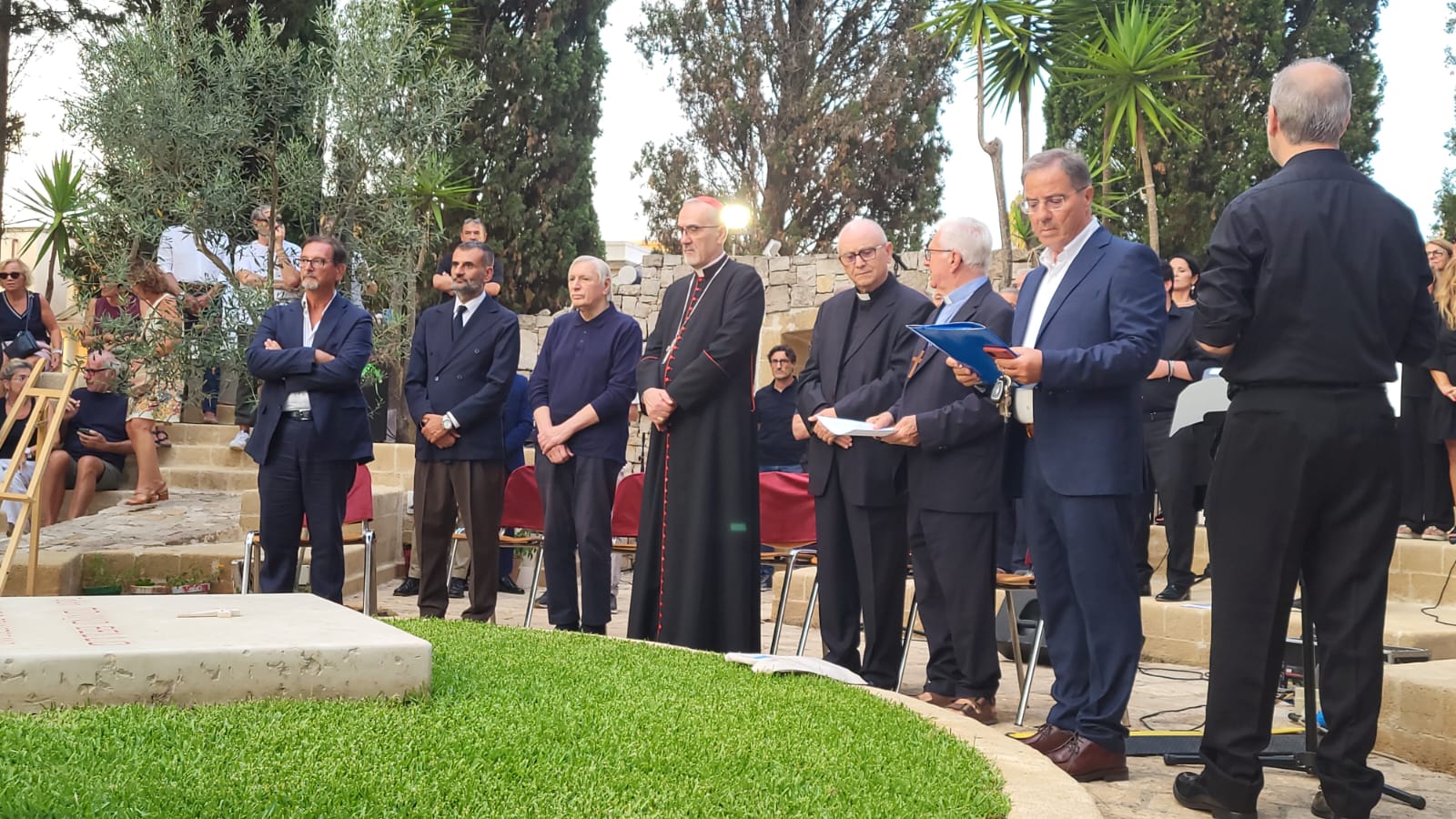
The journey continued in Alessano, at the tomb of Bishop Antonio Bello, where the Patriarch received the “Don Tonino Bello Award” from the president of the foundation, Dr. Giancarlo Piccinni. Interviewed by journalist Mimmo Muolo of the Italian daily Avvenire, Patriarch Pizzaballa reflected on the continued relevance of the thought of the bishop from Salento:
“From Bishop Tonino Bello, we must take the criteria by which he spoke and made his choices, and then bring them into our own time and into our specific circumstances. I believe one thing is clear: first of all, he would not have remained silent... We will not change the great political landscape, but it is our duty, in the places where we are and within our own realities, to be a living, determined and clear presence, above all one capable of speaking.”
Addressing the dramatic situation in the Middle East, the Patriarch emphasized that violence is only the fruit of something that begins much earlier, at the level of words.
In Alessano, Patriarch Pizzaballa offered an important reflection: human beings define the reality around them through the way they communicate. But when language becomes “dehumanizing,” the other ceases to be a “you” with whom we can speak and becomes merely an “object” to be eliminated. He recalled:
“We are living within a context of physical and military violence... but the violence began earlier, in the words, in the language that was being used, in dehumanizing language. Violent language creates a violent culture that becomes violence... It is not enough to say no to weapons; we must work to recover a language, a word and a way of thinking that sees the other as part of ourselves.”
From an ethical and moral perspective, the Patriarch’s words to the young people participating in the “Carta di Leuca” gathering touched upon the roots of the crisis facing contemporary humanity. In its isolation and inner fragmentation, humanity seems to have lost the ability to recognize the other as a fundamental part of its own identity.
The dehumanization caused by violence is not merely a strategy employed by those who seek war; it is also a “disease” of relationships—a disease that must be healed.
In his addresses throughout Puglia, and especially in his words to young people, Patriarch Pizzaballa recalled that there is no such thing as a solitary identity: I become myself only when I recognize the other as “part of me.” In this sense, conflict is the radical destruction of the very possibility of encounter.
The Patriarch's proposal—to “come to terms” with the other and to live together despite our wounds—is a challenge for everyone. It requires a leap in maturity: moving from self-defense to a culture of welcoming the other as an essential element that completes our existence.
During his encounter with the young people of Carta di Leuca, Patriarch Pizzaballa also presented the Mediterranean not as a frontier, but as a place of “encounter,” because:
“The Mediterranean has always, for millennia, been a meeting place of different cultures, languages and traditions... Peoples have always encountered one another, and therefore there will always be a need to find ways to get to know one another, so that all these differences become not something that frightens us.”
The Patriarch reminded the young people that fear arises from a lack of knowledge. To know is an act of both the mind and the heart, and only when knowledge becomes relationship can the fear of the “different” be transformed into discovery.
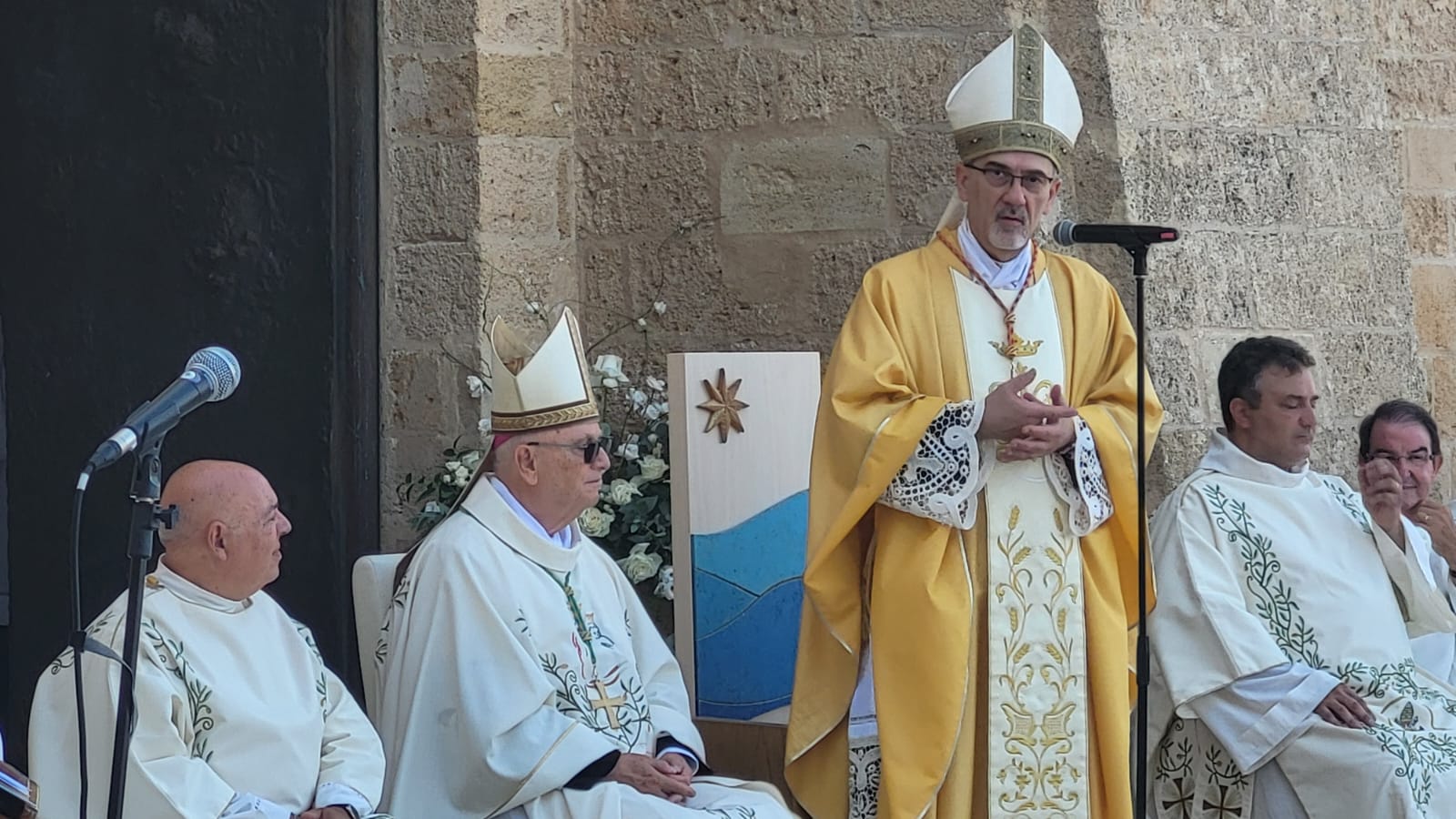
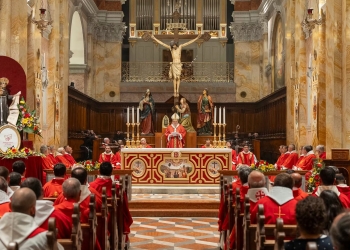
The Eucharistic celebration in Santa Maria di Leuca represented the culmination of the visit. Reflecting on the readings, Patriarch Pizzaballa raised the fundamental question that challenges every conscience:
“Adam, where are you? Very often in the Holy Land... people ask themselves, where is God in all this? And I answer with this question, with God’s question: not where is God, but where are you, man? What have we done with our humanity?”
He reminded those present that human dignity does not lie in power, but in being made in the “image and likeness of God.”
The Patriarch urged people not to delegate peace to “macro-systems,” but to act within their own daily contexts, because:
“We think that peace must be made by the powerful, but instead it passes through the free choice of each one of us... We must continue to generate life; we must not resign ourselves to the idea that we can do nothing... Our backs must be straight, our heads must look upward, but our hands must always remain open to everyone.”
The message the Patriarch entrusted to the young people is therefore an invitation to responsible action and to cultivating a “culture of hope.” This is not a superficial optimism, but an inner strength born of desire.
Santa Maria di Leuca, he suggested, must be an “open eye” looking out over the Mediterranean and a symbol of this new human and spiritual attitude: “keeping our gaze raised toward God and our hand open toward our brother.”
It is through this attitude that we can write together a history of peace and dialogue.