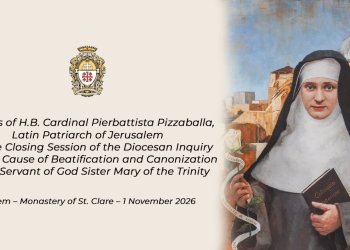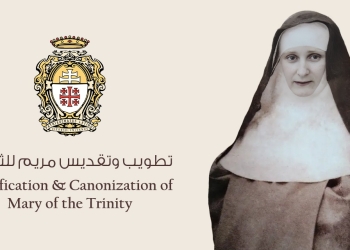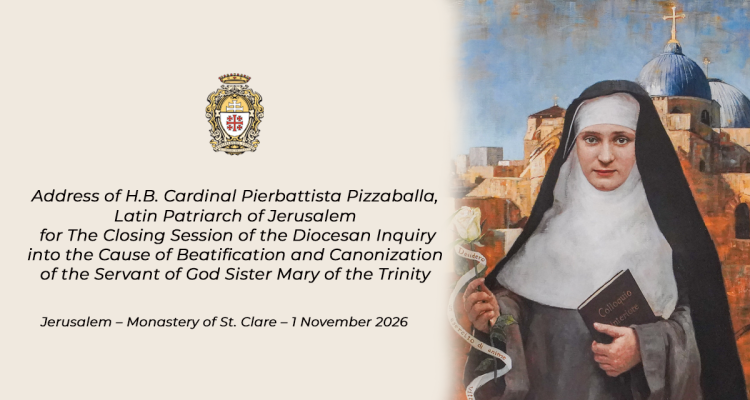
Address for the Closing Session of the Diocesan Inquiry
into the Cause of Beatification and Canonization
of the Servant of God Sister Mary of the Trinity (Louisa Jaques, 1901–1942)
Jerusalem – Monastery of St. Clare – November 1, 2026
“Yes, be my little seed,
planted here in the soil of Jerusalem,
to bear fruit in my Church, fruit and many other seeds,
according to the measure of my generosity.
Le me act. But let your obedience be perfect,
like the seed abandoned completely to my action.
You know that the grain of wheat must die to bear fruit”
(Notes, no. 502)
1. Opening Greetings
Dear brothers and sisters,
May the Lord give you peace!
I extend a warm and fraternal greeting to all of you gathered here for this important moment in the life of our Church.
A special greeting goes to my brother the bishops, the members of the Tribunal and the Historical Commission, to the Vice-Postulator and, through him, the Postulator, and to all those who, over these past months, have contributed to the Cause of Beatification of the Servant of God Sister Mary of the Trinity with competence, generosity, and discretion.
It is significant that, on this very day, the Solemnity of All Saints, we are gathered to collect and present to the Church the documents and testimonies of one of her daughters, who, through the radiance of her reputation for holiness, allows us to contemplate the blessing promised by Jesus in today's Gospel. The Servant of God, Sister Mary of the Trinity, whose mortal remains rest in this church, courageously walked the path of life, learning the way of bliss right in the midst of her daily existence, even amid tears, poverty, hunger, and a thirst for love, but above all by listening to the voice of God and surrendering with confidence herself to Him.
2. The Journey of the Diocesan Phase
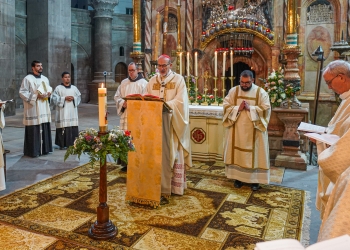
A year and a half ago, on April 30, 2025, here in this church, we celebrated the opening of the Diocesan Inquiry into the Cause of Beatification of the Servant of God Sister Mary of the Trinity. Today, with solemnity and gratitude, we celebrate its conclusion. We are filled with wonder and gratitude for the great grace that has accompanied these months and every canonical act required to fulfill the mandate entrusted to us.
The members of the Tribunal, the experts of the Historical Commission, the theological censors and experts in mysticism, and the medical experts have all worked diligently, with dedication and competence. Each has made a valuable contribution toward fulfilling the requirements of the Inquiry: gathering documentary and testimonial evidence aimed at establishing the truth and attaining moral certainty concerning the heroic virtues of the Servant of God.¹
We began this canonical process with a sense of reverent anticipation, describing it as a “time of investigation, collection, discernment, and listening.”² Above all, we emphasized the importance of listening: Above all, a time of listening. “Attentive listening to God’s action and the freedom to respond to Him in the troubled life of Sister Mary of the Trinity. Listening to the Spirit, who has spoken and continues to speak today to our Church, through the silent and prayerful witness of the Servant of God.”³
Today, as we come to the end of this journey, we can appreciate just how extensive and thorough this process of listening has been. The wealth of archival documents gathered and the numerous testimonies received, now presented by the Tribunal of the Cause, offer a rich and multifaceted picture of the life of the Servant of God. This process has been extensive in scope, but above all, significant in depth and substance. It has brought together different languages and given voice to diverse places, cultures, and sensibilities. Indeed, as we know, the life of Sister Mary of the Trinity spanned several countries—South Africa, Switzerland, Italy, and the Holy Land—but her reputation for holiness has transcended these borders, reaching fifty countries across all continents.
3. A Word from the Gospel on the Life of the Servant of God
Throughout the Inquiry, each person was able to offer a testimony concerning the life of the Servant of God, her Christian experience, and the goodness and fruitfulness of her witness. Her virtues emerged, as did the limitations she also had—thanks be to God. Yet the testimonies and documents have also brought to light, in a new way, another word: the word of the Gospel, quoted directly in the writings of Sister Mary of the Trinity: “Unless a grain of wheat falls into the earth and dies, it remains just a single grain; but if it dies, it bears much fruit” (Jn 12:24).
These words of Jesus provide a key to interpreting her very life. Indeed, the Lord Himself entrusted this word of the Gospel to the Servant of God, as we read in her Notes: “Yes, be my little seed, planted here in the soil of Jerusalem, to bear fruit in my Church, fruit and many other seeds, according to the measure of my generosity. Let me act. But let your obedience be perfect, like the seed completely abandoned to my action. You know that the grain of wheat must die to bear fruit.”⁴
In light of all that we have heard and gathered during this Inquiry, it is difficult not to recognize the prophetic power of these words. The life of Sister Mary of the Trinity bears witness to God's faithfulness to His promises, which are always promises of life and fruitfulness. The “little seed planted here, in the soil of Jerusalem,” in this land of Judea, has borne fruits of life, unity, and charity. May she continue to intercede for the fruits of peace and reconciliation.
Today, we treasure the lesson in holiness that this sister of ours so eloquently teaches us: to let God act. It is a rare art. In the Interior Colloquy, we read: “All souls could quickly attain the fullness of their holiness if they allowed me to act without resisting. Oh, the hidden reservations rooted in selfishness that prevent the omnipotence of the Holy Spirit from acting within you.!”⁵ These words speak to us today, not merely because they belong to the spiritual journey of the Servant of God. They are a word addressed to our Church and to each one of us. Let us allow God to act without resistance (cf. Is 50:5), and cooperate wholeheartedly with His work of peace.
4. Handing over the Inquiry to Mother Church
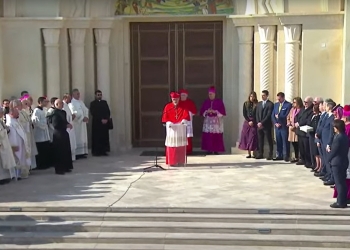
We will now proceed to the final act of the diocesan phase: following the declaration of the definitive closure of the Inquiry and the taking of the oath by the members of the Tribunal and the Vice-Postulator, all records and documents will be gathered, bound, and sealed, and then sent to Rome, to the Dicastery for the Causes of Saints. The 'bearer' whom I have officially appointed, will deliver the fruits of the diocesan inquiry to the Holy See. Therefore, from this moment onward, the work accomplished over these months passes from our local Church and is handed over to the universal Church. The documents will undergo the examination prescribed by canonical procedure and the subsequent discernment of the Holy See, so that the life, the practice of heroic virtue, and the reputation for holiness of the Servant of God may be evaluated in accordance with the Church’s requirements on the path toward beatification. We therefore entrust with faith to Mother Church what we have gathered.
We hand it over with gratitude, knowing that everything accomplished has been possible above all through the grace of God.
We hand it over with humility, knowing that it is not for us to pronounce the final say on the holiness of a person. We now place this journey in the hands of the Church, through the discernment of the Dicastery for the Causes of Saints and the Holy Father.
We hand it over with hope, because we believe that holiness, when authentic, does not belong solely to the past: it continues to bear fruit in the Church.
And we hand it over also with a prayer: that the Lord, through the intercession of the Servant of God Sister Mary of the Trinity, may grant that we too, in our own vocation and in our own time, may become that little seed which is not afraid to fall into the earth, to die to itself, and to allow itself to be transformed by the power of God's love.
Today, on All Saints’ Day, we look upon the multitude of saints that no one can count, and we remember that holiness is always a story of grace received, of freedom spent at the service of the Kingdom, and of love offered in concrete ways.
Let us, therefore, entrust the journey of the Servant of God Sister Mary of the Trinity to the Church, and entrust ourselves as well to the Lord, together with our Church of Jerusalem, especially wherever the horizon is darkest.
May the Virgin Mary, Mother of the Church and Queen of All Saints, enlighten and accompany us, and may the Lord, who has begun His work in us, bring it to completion.
*Translated from the original in Italian